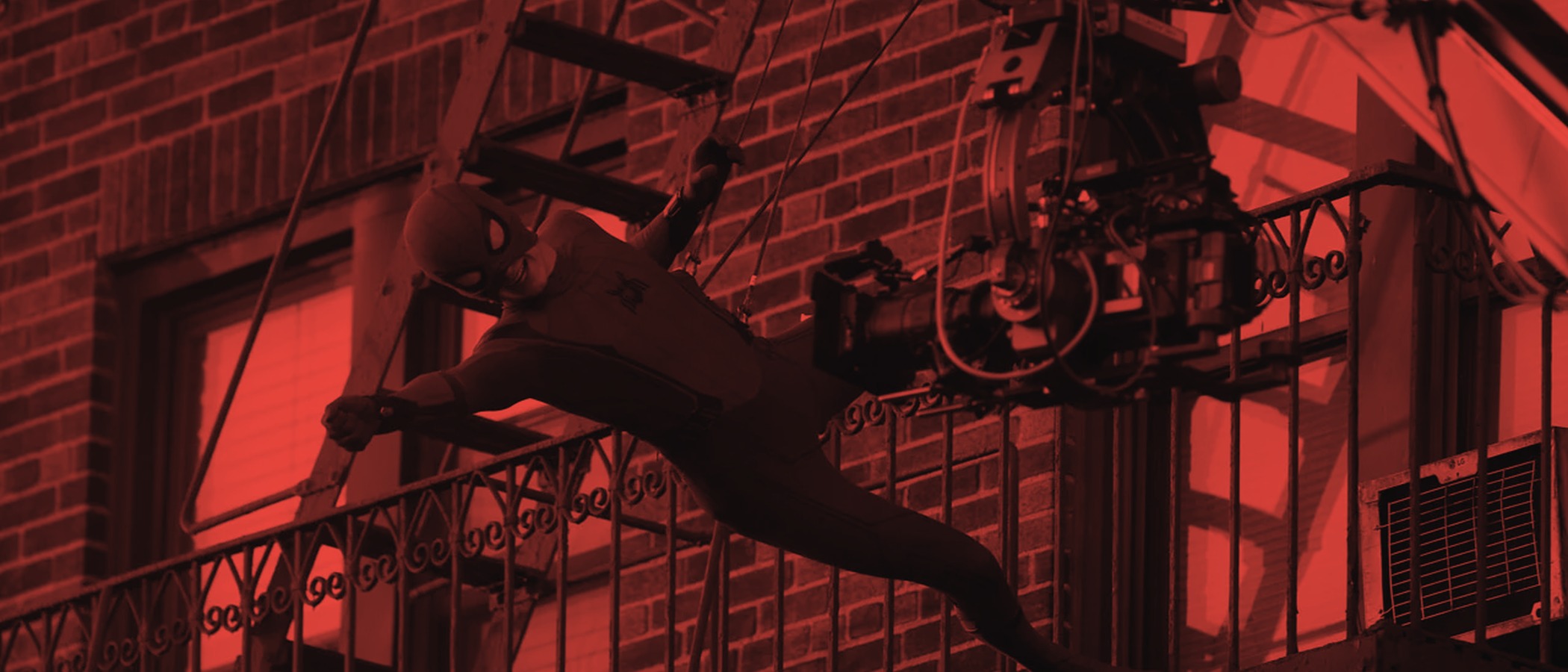
Sam Raimi's Spider-Man 2 came out in 2004. By 2012 Sony had thrown the whole thing away and started again with Andrew Garfield. By 2016 they had thrown that away too and lent the character to Marvel. In 2018 an animated film about a different Spider-Man entirely, Miles Morales, turned up and was better than all of them, and it did it with a shot of a teenager falling upwards. Three Peter Parkers in twenty years is not creative restlessness. It is a licensing clause.
The clause is the whole story. Sony has to put a Spider-Man film into cinemas every few years or the rights go back to Marvel, so a Spider-Man film gets made whether there is an idea or not. Sometimes there is (Raimi, Spider-Verse). Sometimes there is a Jamie Foxx in a blue onesie. Here is the timeline, era by era, and an honest ranking of what each reboot was for.
The Rights Problem
To understand Spider-Man's revolving door of actors, you need to understand the contract. In 1999, Marvel - then bankrupt and desperate - sold Spider-Man's film rights to Sony Pictures. The deal included a clause that's shaped the character's entire cinematic history: if Sony doesn't produce a Spider-Man film within a set window, the rights revert to Marvel.
This single clause explains almost everything. The Amazing Spider-Man (2012) was greenlit not because anyone had a burning creative vision for a new Peter Parker - Andrew Garfield and Marc Webb's involvement came later - but because Sony's clock was ticking. They had to make a Spider-Man film or lose the property entirely. When your reboot exists primarily as a legal filing, don't be shocked when it feels like one.
The 2015 deal between Sony and Marvel Studios, which brought Spider-Man into the MCU, was a business arrangement masquerading as creative collaboration. Tom Holland got to swing alongside the Avengers, Sony got to slap the Marvel logo on their posters, and both studios got to pretend this was about storytelling rather than intellectual property management. It worked brilliantly - Spider-Man: Homecoming is a genuinely great film - but the arrangement was always commercial first, creative second.
The Raimi Era: Lightning in a Bottle
Sam Raimi's Spider-Man trilogy (2002-2007) was, at its best, magnificent. Tobey Maguire brought a genuine vulnerability to Peter Parker that made the character feel human for the first time on screen. Spider-Man 2 - with Alfred Molina's Doc Ock and that train sequence - is legitimately one of the greatest superhero films ever made. It understood that Spider-Man's appeal isn't the superpowers; it's the guilt, the sacrifice, the "with great power" burden that makes every triumph bittersweet.
Then Spider-Man 3 happened. Sony demanded Venom. Raimi wanted Sandman. The compromise satisfied nobody. Emo Peter Parker dancing down the street is the exact moment the Raimi era died - not with a bang but with a jazz-hands strut that haunts the internet to this day. Raimi had a fourth film planned that reportedly would have been extraordinary. Sony pulled the plug. The reboot clock started ticking.
The Webb Era: The Beautiful Misfire
Andrew Garfield is a phenomenal actor who gave a genuinely excellent performance as Spider-Man in films that didn't deserve him. Marc Webb's Amazing Spider-Man duology (2012-2014) suffered from a terminal case of franchise planning - Sony was so desperate to build a cinematic universe (Sinister Six! Venom! Aunt May solo film! Yes, really!) that they forgot to make the current film work first.
The Amazing Spider-Man 2 is a cluttered mess of villain origins, corporate espionage subplots, and Peter's parents' inexplicably complicated backstory. Gwen Stacy's death - which should have been the emotional centrepiece - is genuinely devastating, largely because Garfield and Emma Stone's real-life chemistry made their on-screen relationship the one thing in the franchise that felt authentic. But one great death scene can't save a film that's trying to be four films at once.
The franchise was quietly euthanised. Sony went back to the drawing board. Again.
The MCU Era: Polished to Perfection
Tom Holland arrived as a younger, more energetic Peter Parker who was explicitly positioned as a protégé to Tony Stark. The MCU Spider-Man films are polished, funny, and impeccably produced. They are also, if we're being honest, the least distinctively Spider-Man of the three iterations.
Holland's Peter Parker lives in a world of billionaire mentors, space battles, and multiversal chaos. He's a character defined by his relationship to other franchise properties rather than by his own struggles. The working-class kid from Queens who can't pay rent and fights crime between homework assignments has been replaced by a teenager with access to Stark Industries technology and a suit made by an AI. It's entertaining but it's not really Spider-Man's story anymore - it's the MCU's story with Spider-Man in it.
No Way Home (2021) was the moment this approach reached its logical conclusion: bring back all three Spider-Men, let nostalgia do the emotional heavy lifting, and bank $1.9 billion. It's a crowd-pleasing masterpiece of fan service. Whether it's a good Spider-Man film is a different question entirely.
The Spider-Verse: The Best Version
Here's the cruel irony: the best Spider-Man films aren't live-action at all. Spider-Man: Into the Spider-Verse (2018) and Across the Spider-Verse (2023) understood something the live-action films keep forgetting - Spider-Man works because anyone can be Spider-Man. The mask is the point. Miles Morales, Gwen Stacy, Spider-Ham, Spider-Noir - the character's universality is his superpower.
These films are visually revolutionary, emotionally sophisticated, and narratively ambitious in ways the live-action reboots never dared to be. They also, notably, don't require you to have seen any previous Spider-Man film. They stand alone. Imagine that.
So Why Does It Keep Happening?
The cynical answer: money. Spider-Man is the single most commercially valuable superhero property on Earth. He outsells Batman, Superman, and the entire Avengers roster in merchandise alone. Every reboot is guaranteed a certain box office floor because the character is bulletproof. Even The Amazing Spider-Man 2, widely considered the weakest live-action Spider-Man film, made $709 million.
The structural answer: the rights deal. As long as Sony owns Spider-Man and must keep producing films to retain him, reboots are inevitable. Creative visions run out or get cancelled; the legal clock never stops.
The cultural answer: Spider-Man is infinitely recastable because the character's appeal is universal. He's young, he's struggling, he's trying to do right despite everything. Every generation gets the Spider-Man it needs. Maguire's earnest nerd. Garfield's wounded outsider. Holland's enthusiastic kid. Morales's cultural barrier-breaker. The character regenerates like the TARDIS - different face, same soul.
Will It Ever Stop?
Not a chance. There will be another Spider-Man reboot. And another after that. And another after that. The character is too valuable, too flexible, and too beloved to ever be left alone for long. The only question is who's next under the mask - and whether we'll get another Spider-Man 2 or another Amazing Spider-Man 2.
Place your bets. We've got about six years until we find out.
Related Articles
- Remakes Nobody Asked For - Hollywood's recycling problem
- Film Franchises That Should Have Stopped - When enough was more than enough
- Why The Dark Knight Is Still the Greatest Superhero Movie - The gold standard
- The Death of the Movie Star - Why IP matters more than actors now
- Hollywood Accounting - How profitable movies somehow lose money