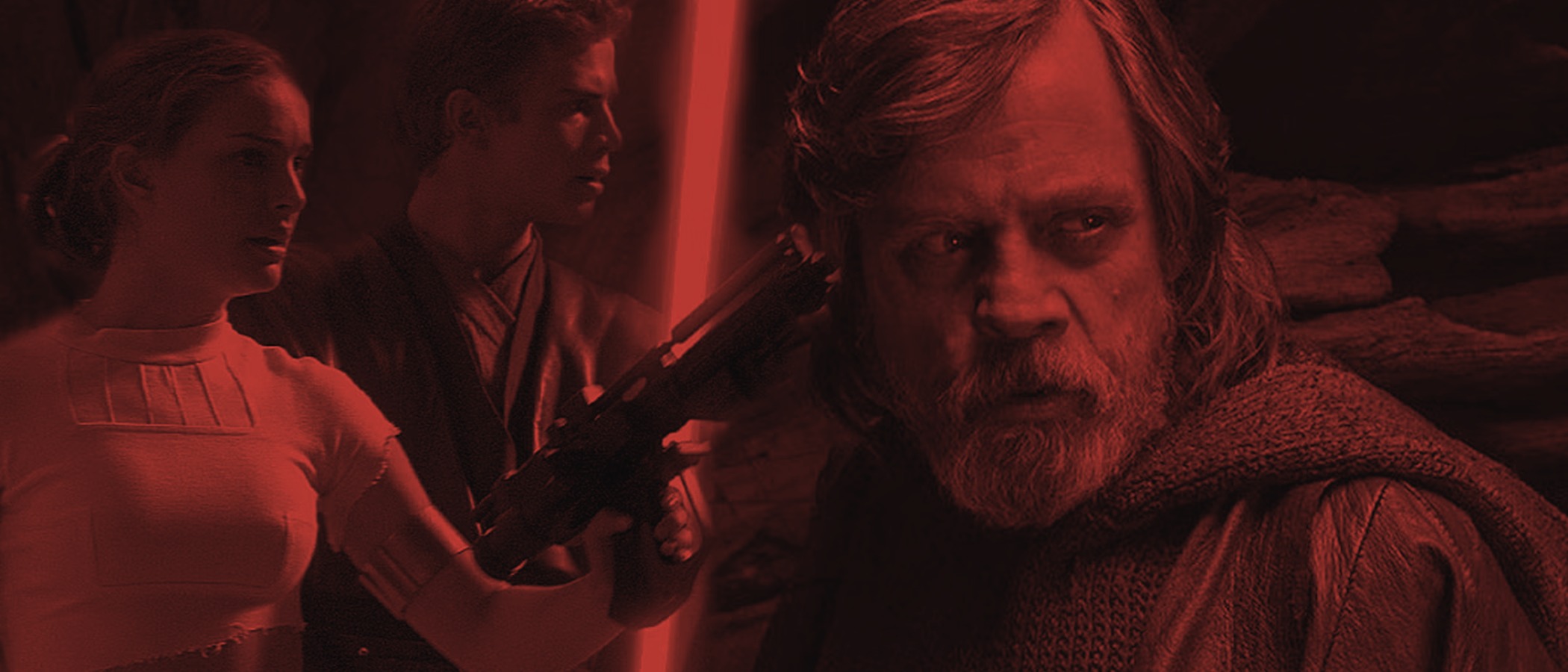
In Revenge of the Sith, Anakin Skywalker kneels in front of Palpatine and is told his new name will be Darth Vader. It is the moment three films have been building to, and it lands like a delivery you were tracking on your phone. You knew when it was coming. You knew what it looked like. The only surprise was the acting.
That is the prequel problem in one scene and no amount of money fixes it: we already know how the story ends, so the tension has to come from somewhere other than what happens. Most prequels never find that somewhere. A few do (The Godfather Part II, Better Call Saul on the telly, arguably Prometheus if you squint), and what they have in common tells you exactly why the rest fail. Here are the three traps, the escapes, and why the studios will keep walking into them regardless.
The Tension Problem
When young Anakin Skywalker is in danger in The Phantom Menace, are you worried? Of course you're not. You know he becomes Darth Vader. He's fine. Well, not fine - he's going to murder children and get his legs chopped off - but he's alive. When we meet young Magneto in X-Men: First Class, we know he survives. When the crew of the Nostromo prequel Alien: Covenant faces xenomorphs, we know the species persists.
This isn't a minor narrative inconvenience. Tension - the genuine uncertainty about whether characters will survive and how events will unfold - is one of cinema's most powerful tools. Prequels arrive with that tool already blunted. The best they can hope for is to show us how something happened rather than what happened, and "how" is rarely as compelling as "what."
George Lucas spent three entire films showing us how Anakin became Vader, and the answer was... poorly written dialogue, an unconvincing romance, and some sand he didn't like. Cheers, George.
The Mystery Problem
Some backstories are better left untold. That's not laziness - it's good storytelling. Wolverine was more interesting when his past was fragmented and mysterious. Han Solo was cooler when we didn't know how he got his name (spoiler: a bored Imperial officer gave it to him, which is somehow the least interesting possible answer). The xenomorphs were more terrifying before Ridley Scott decided we needed to know they were created by a sad android with a god complex.
Solo: A Star Wars Story is the textbook example. Did we need to see Han win the Millennium Falcon from Lando in a card game? Did we need to watch him make the Kessel Run? The answer to every "did we need to see..." question about Solo is a resounding no. Every revelation was less interesting than whatever we'd imagined. The film took one of cinema's great rogues and gave him an origin story that felt like someone filling in a Wikipedia article.
Mystery is a feature, not a bug. Not every question needs an answer.
The "Remember This?" Problem
Prequels are pathologically addicted to references. They cannot help themselves. Every scene becomes a game of "spot the origin" - here's where this character got their name, here's the first time someone said that catchphrase, here's the object that becomes important later, nudge nudge wink wink aren't you clever for noticing.
Rogue One literally pauses its narrative to shove in Ponda Baba and Dr. Evazan - two characters who appear in the original Star Wars for approximately eight seconds - for no reason other than to make audience members point at the screen and whisper "I know them!" This isn't storytelling. It's a treasure hunt disguised as cinema.
The prequel trilogy does this constantly. C-3PO was built by Anakin? Boba Fett is a clone of his dad? Chewbacca was mates with Yoda? Each reveal makes the Star Wars galaxy feel smaller, not richer. What was once a vast, unknowable universe becomes a village where everyone knows everyone else.
The Ones That Actually Work (Sort Of)
It's not all doom and gloom. A handful of prequels have cracked the code, usually by doing something the original didn't.
X-Men: First Class works because it's essentially a completely different genre - a 1960s-set spy thriller that happens to feature mutants. Matthew Vaughn understood that showing us Charles and Erik's friendship wasn't about ticking origin-story boxes but about genuine emotional tragedy. We know they'll become enemies, and that knowledge makes every moment of camaraderie ache.
Better Call Saul (yes, it's television, but the principle applies) is arguably the greatest prequel ever made because it's not really about explaining Saul Goodman. It's about Jimmy McGill - a wholly original character study that happens to end where Breaking Bad began. It works because it prioritises "who" over "how."
The Godfather Part II weaves its prequel material with a present-day narrative, using young Vito Corleone's rise as counterpoint to Michael's moral decay. De Niro's Vito isn't explaining the character we already know - he's illuminating him from a new angle. That's the difference between a prequel and a revelation.
And Prey (2022) revitalised the Predator franchise by going back to basics - stripping away the technology, the military hardware, and decades of lore to ask a simple question: what if it was just a young Comanche woman versus an alien hunter? It's a prequel that works precisely because it ignores most of what came before.
The Real Reason They Keep Getting Made
Let's not be naive. Prequels exist because they're financially safer than original stories. A prequel comes with brand recognition, an established fanbase, and the kind of built-in marketing that no original IP can match. Studios don't greenlight prequels because they have burning artistic questions to answer - they greenlight them because the logo on the poster guarantees a certain number of tickets sold.
This is the same industrial logic that drives remakes, reboots, and cinematic universes. Why risk an original idea when you can mine existing properties? The result is a film landscape that constantly looks backward, endlessly excavating its own history for content, like a snake eating its own tail and calling it a meal.
What Would Actually Fix Prequels
The prequels that work share common traits: they tell stories that don't need the original to make sense. They prioritise character over continuity. They resist the urge to explain every detail. They're willing to be their own thing.
If your prequel only works as a companion piece - if it can't stand alone as a film in its own right - then it's not a movie. It's supplementary material. It's a DVD extra that somehow got a theatrical release and a £200 million budget.
The next time a studio announces a prequel, ask yourself: "Is there a story here that needs telling, or are they just showing me how Indiana Jones got his hat?" If it's the latter, save your money. You already know how it ends.
Related Articles
- Film Franchises That Should Have Stopped - When one more sequel was one too many
- Remakes Nobody Asked For - Hollywood's recycling problem
- The Unwritten Rules of Trilogies - Why part three matters most
- Underrated Sequels That Slap - The follow-ups that actually delivered
- Why The Dark Knight Is Still the Greatest Superhero Movie - A sequel that earned its existence