Watch the four of them back to back. Adam West runs across a pier holding a bomb over his head while a brass band plays. Michael Keaton stands very still in a rubber suit and lets Jack Nicholson do the talking. Christian Bale interrogates a man by dropping him off a building, three years after the towers came down. Robert Pattinson smears eyeliner in a lift and writes in a diary. Same cape, same city, same dead parents, and you could carbon-date each one from a single frame.
No other character gets remade this often or this differently, because Batman has no powers and no fixed personality. He is a man in a suit responding to a city, and the city is us. This is a walk through the four eras, what each was really frightened of, and why the Joker changes every time the Batman does.
The 1960s: Adam West and the Pop Art Batman
The 1966 Batman: The Movie is, by modern standards, absolutely unhinged. Adam West's Batman is a square-jawed civic hero who carries shark repellent, delivers earnest moral lessons, and can't walk ten feet without encountering a colour-coded villain with an elaborate theme. It's camp raised to the level of art - or possibly art lowered to the level of camp; either way, it's magnificent.
But context matters. The 1960s were the decade of Pop Art, of Warhol and Lichtenstein turning commercial imagery into high culture. West's Batman was doing the same thing - taking a pulp comic character and processing him through irony, visual excess, and deadpan absurdity. The show and film were laughing with the source material, not at it, celebrating the joyful stupidity of a man who dresses as a bat to fight crime.
In an era defined by counterculture, psychedelia, and the rejection of earnest heroism, Batman became a joke - the most loveable, most self-aware joke in television history. The 60s didn't need a dark knight. They needed someone to remind them that not everything has to be serious.
The 1989-1997 Era: Tim Burton and Joel Schumacher
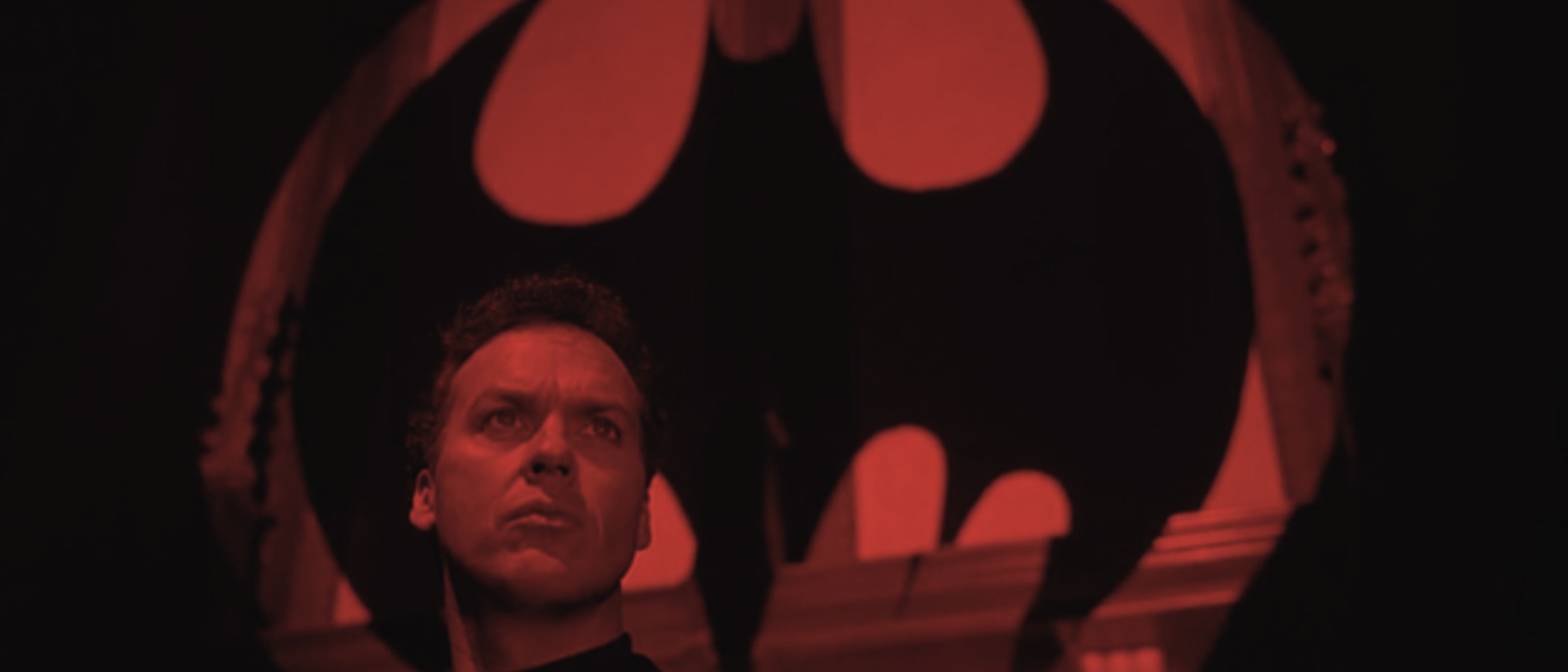
Tim Burton's Batman (1989) was a cultural earthquake. After two decades of the Adam West association, Burton reimagined Gotham as a Gothic nightmare - all sharp angles, perpetual darkness, and Danny Elfman's thunderous score. Michael Keaton's Bruce Wayne was neurotic, weird, and genuinely disturbed. Jack Nicholson's Joker was terrifying and hilarious simultaneously. It was the first superhero film to take itself seriously without taking itself too seriously.
This was the Batman for the late Reagan era - a response to urban decay, corporate excess, and the creeping feeling that the American city was becoming uninhabitable. Burton's Gotham looked like New York's worst nightmares about itself, and Batman was the vigilante fantasy for a population increasingly convinced that institutions had failed them.
Batman Returns (1992) pushed the darkness further - too far for McDonald's, who pulled their Happy Meal tie-in - and then Joel Schumacher arrived and... well. Batman Forever (1995) was garish but watchable. Batman & Robin (1997) was a neon-drenched catastrophe that killed the franchise for eight years. The Bat-nipples. The ice puns. Arnold Schwarzenegger's Mr. Freeze making "cool" jokes with the energy of a man who has given up on dignity.
Schumacher's Batman reflects the late-90s obsession with excess, spectacle, and the commodification of everything. It's the Batman equivalent of a stretch Hummer - technically impressive, spiritually empty, and nobody's proudest moment.
The 2000s: Christopher Nolan's Post-9/11 Knight
Batman Begins (2005) and The Dark Knight (2008) didn't just reinvent Batman - they reinvented the superhero genre. Nolan's Gotham was recognisably our world, his Batman a plausible response to real-world problems, and his themes - fear, chaos, surveillance, the limits of justice - were ripped directly from post-9/11 anxieties.
Heath Ledger's Joker is the definitive screen villain of the 21st century because he embodies 2000s-era terrorism: irrational, ideology-free, designed purely to create chaos and expose the fragility of civilised order. "Some men just want to watch the world burn" wasn't a character description - it was a cultural diagnosis. The ferry scene is essentially the trolley problem weaponised as blockbuster entertainment.
We've written extensively about why The Dark Knight remains the greatest superhero film, but its cultural timing was essential to its impact. In an era of surveillance programmes, pre-emptive warfare, and the erosion of civil liberties in the name of security, Nolan gave us a Batman who builds a city-wide surveillance system, uses it once, and then destroys it. The fantasy wasn't that Batman could punch the bad guys - it was that power could be wielded responsibly and then voluntarily relinquished.
The Dark Knight Rises (2012) is messier, more ambitious, and less successful, but its themes of class warfare and populist revolution feel eerily prescient in retrospect. Bane's speech about "giving Gotham back to its people" could soundtrack half the political movements of the following decade.
The 2020s: Robert Pattinson's Emo Detective
Matt Reeves' The Batman (2022) gave us something genuinely new: Batman as a damaged, isolated, borderline-dysfunctional young man processing grief through violence and an obsessive need for control. Pattinson's Bruce Wayne doesn't even bother with the billionaire playboy persona - he's a hollow-eyed recluse who only comes alive in the cowl.
This is the Batman for the mental health era, the loneliness epidemic, the generation that grew up online and struggles to function in the physical world. Pattinson's Wayne isn't aspirational - he's a cautionary tale about what happens when trauma goes untreated and isolation becomes identity. His Gotham is drenched in rain and corruption, a city drowning in its own dysfunction, and his Batman is less a hero than a symptom.
The detective focus - The Batman is essentially a noir thriller with a costume - reflects a post-MCU exhaustion with spectacle. After a decade of sky beams and CGI armies, audiences were ready for a Batman who solves crimes rather than punches aliens. Reeves understood that in 2022, the fantasy wasn't power - it was competence. The ability to see clearly in a world designed to confuse.
The Joker Parallel
Batman's villains evolve in parallel. Cesar Romero's 60s Joker was a prankster. Nicholson's was a showman. Ledger's was a philosopher of chaos. Joaquin Phoenix's (in Joker, 2019) was a product of social failure - austerity, mental health system collapse, and the abandonment of vulnerable people by institutions that should protect them.
Phoenix's Joker is arguably the most culturally significant, because he emerged during a period of intense debate about inequality, radicalisation, and the social contract. The film was controversial precisely because it asked audiences to empathise with a man becoming a monster, and that empathy felt dangerous in a world where actual violence was being committed by men who felt abandoned by society.
The Joker, like Batman, is a mirror. And what he reflects is usually the thing we're most afraid to look at.
What Comes Next?
The next Batman - whoever plays him, whenever it arrives - will inevitably reflect whatever the culture is processing at that moment. If AI anxiety dominates, expect a Batman dealing with technological control. If climate collapse accelerates, expect a Gotham literally drowning. If political polarisation intensifies, expect a Batman navigating a city at war with itself.
The genius of Batman as a character is his emptiness. Bruce Wayne is a vessel - wealthy enough to be anything, traumatised enough to be driven, masked enough to be projected upon. He's the ultimate blank canvas for cultural anxiety, which is why he endures while other superheroes become dated.
Superman tells you what a culture aspires to be. Batman tells you what a culture is afraid of. And that's why, sixty years after Adam West put on the cowl, we're still watching, still reinventing, and still finding new fears for the Dark Knight to embody.
Every decade gets the Batman it deserves. The question is: what does our Batman say about us?
Test Your Film Knowledge
- Frame-a-Day - Identify classic Batman frames
- Movie Quotes - "Why so serious?" and other iconic lines
- Emoji Plot - Decode superhero plots told in emojis
Related Articles
- Why The Dark Knight Is Still the Greatest Superhero Movie - Our definitive take
- Movie Villains Who Had a Point - The Joker makes every list
- Movie Scores That Outgrew Their Films - Danny Elfman's Batman theme is eternal
- The Death of the Movie Star - Batman outlives every actor who plays him
- Franchises That Should Have Stopped - Batman & Robin nearly killed the whole thing