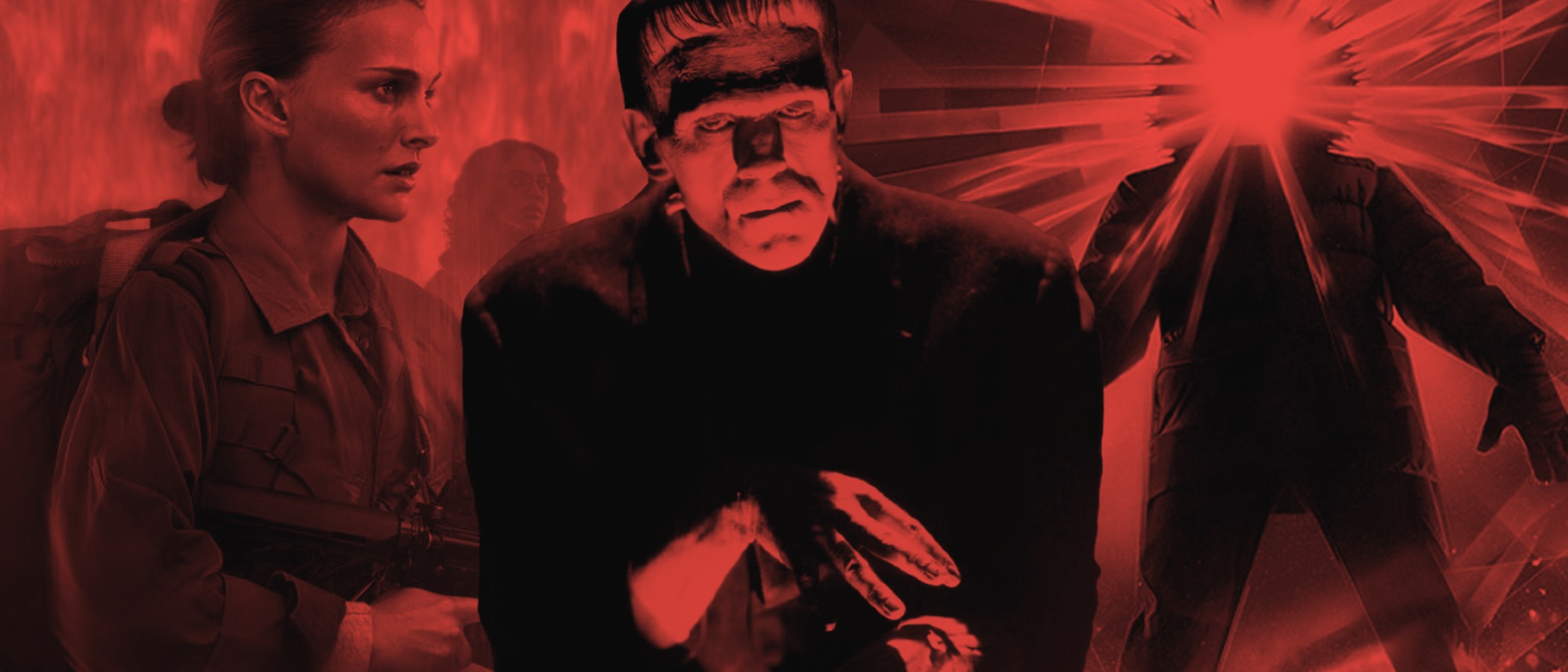
In March 2020 Contagion went to the top of the iTunes chart, nine years after release, because everyone wanted to know how it ended. It was worse than that. Steven Soderbergh's advisers had been so careful that the film had already shown us the fomites, the R-number, the conspiracy blogger and the queue for the vaccine, in order, in 2011. It is a horror film in which the monster is correct.
Which is the argument of this piece: horror is scarier when the science holds, and most of the time it does not even try. So here are ten films marked honestly, five that did the reading and five that did not. Alien gets a distinction for parasitology. The Core gets a note sent home to its parents. Sharknado is here for the same reason you keep the class clown in the photo.
The Ones That Got It Right
Contagion (2011) - Terrifyingly Accurate
Steven Soderbergh's Contagion was so scientifically accurate that when COVID-19 hit in 2020, epidemiologists pointed to it as the most realistic depiction of a pandemic ever filmed. The R0 calculations, the fomite transmission, the social breakdown, the desperate race for a vaccine - all of it was vetted by actual virologists and public health experts.
The film even predicted the rise of conspiracy theorists and snake oil salesmen during a pandemic, with Jude Law's blogger character peddling fake cures while the real scientists struggled to be heard. In 2011, this seemed like dramatic licence. By 2020, it looked like documentary footage. Sometimes the scariest thing a horror film can do is be right.
The one liberty Soderbergh took was the speed of vaccine development - in the film, a working vaccine appears within months. In reality, even the remarkably fast COVID vaccines took about a year. But given that everything else was essentially prophetic, we'll let that slide.
Alien (1979) - The Biology of Parasitism
The xenomorph's lifecycle is based on real parasitoid biology, and it's disturbingly accurate. Parasitoid wasps - specifically species like Cotesia glomerata - implant their eggs inside living hosts, where the larvae develop before erupting out of the host body. Sound familiar? The chestburster scene isn't science fiction - it's science fact with better production design.
Ridley Scott and designer H.R. Giger drew directly from parasitology, and the result is a creature that feels biologically plausible in a way that most movie monsters don't. The xenomorph has a lifecycle, it has ecological needs, it adapts to its host species. It's not a magical boogeyman - it's an organism. And organisms are far more frightening than magic, because organisms are real.
The Andromeda Strain (1971) - Microbiology Done Properly
Robert Wise's adaptation of Michael Crichton's novel is essentially a procedural about scientists studying an extraterrestrial pathogen, and it treats the scientific process with genuine respect. The containment protocols, the systematic elimination of variables, the peer disagreements - it all feels authentic because Crichton was a medical school graduate who understood how research actually works.
The film's depiction of a microorganism that mutates to dissolve rubber and plastic is speculative but grounded in real biochemistry. Certain extremophile bacteria can indeed break down synthetic materials. The Andromeda Strain extrapolates from known science rather than inventing nonsense, and the result is a film that terrifies through plausibility.
28 Days Later (2002) - Rage Virus Virology
Danny Boyle's rage virus isn't strictly realistic, but it's grounded in enough real science to feel plausible. The concept of a modified virus that amplifies aggression while suppressing higher brain function has roots in actual virology - rabies, for instance, does exactly this in animals, altering behaviour to increase transmission through biting.
The transmission speed is exaggerated (rabies takes days to weeks; the rage virus takes seconds), but the underlying mechanism is sound. A blood-borne pathogen that targets the limbic system and overrides the prefrontal cortex is theoretically possible. Virologists have noted that while the specific virus in 28 Days Later doesn't exist, the concept isn't as far-fetched as zombies rising from graves. Cold comfort, that.
The Ones That Got It Very, Very Wrong
The Core (2003) - Physics Had a Breakdown
Right. Where to begin. The Core is about Earth's core stopping its rotation, which would cause the planet's magnetic field to collapse. The solution: drill to the centre of the Earth in a ship made of "unobtanium" (yes, really) and restart the core with nuclear explosions.
Every single element of this premise is wrong. The core can't "stop rotating" independently of the planet. Even if it could, you can't drill to it - the pressure at the Earth's core is about 360 gigapascals, which would crush any conceivable material. The temperature is around 5,400°C, which is roughly the surface of the sun. And nuclear explosions wouldn't "restart" rotation any more than kicking a car restarts the engine.
The film was so scientifically illiterate that it's now used in university geology courses as an exercise in identifying errors. Students reportedly find over 100 distinct scientific impossibilities. That's almost impressive in its own right - achieving that density of wrongness requires a kind of anti-expertise.
Lucy (2014) - The Ten Percent Myth
Luc Besson's Lucy is built entirely on the premise that humans only use 10% of their brains, and that unlocking the remaining 90% grants superpowers including telekinesis, time travel, and the ability to become a USB stick. (That last one is not a joke. She literally becomes a flash drive at the end.)
The "10% of our brains" thing is complete bollocks. Neuroimaging shows that we use virtually all of our brain, with different regions active at different times depending on the task. You don't have 90% of your brain sitting idle waiting to grant you psychic powers. If you did, brain injuries would be largely inconsequential, which anyone who's ever met a neurologist can confirm they absolutely are not.
Morgan Freeman delivers the 10% myth with such gravitas that you almost believe him, which is perhaps the real crime. When Morgan Freeman tells you something, you instinctively trust it. Using his authority to propagate neuroscience nonsense should be a criminal offence.
Prometheus (2012) - Running in Straight Lines
Beyond its well-documented plot holes, Prometheus contains a scene where Noomi Rapace performs a caesarean section on herself to remove an alien from her abdomen, staples herself shut, and then immediately runs around fighting aliens. The surgical procedure itself is shown with some anatomical accuracy, but the recovery time is where science takes a holiday and doesn't come back.
A real caesarean section requires weeks of recovery. The abdominal muscles are cut through, the uterus is opened, and the patient is advised not to lift anything heavier than their baby for six weeks. Rapace's character is doing parkour within minutes. Her abs alone deserve an Oscar for their performance.
Also: the biologists in this film, who are supposedly trained scientists on an interstellar expedition, approach an unknown alien organism that looks like a angry cobra and try to pet it. Darwin would be spinning in his grave so fast you could attach a generator.
Deep Blue Sea (1999) - Shark Brain Enlargement
The premise of Deep Blue Sea is that scientists genetically engineer sharks to have larger brains in order to harvest brain tissue for Alzheimer's research. The sharks, now super-intelligent, proceed to systematically dismantle the research facility and eat everyone.
Where to start? Brain size doesn't correlate linearly with intelligence - if it did, sperm whales would be running the planet. Shark cognition isn't limited by brain size but by neural architecture. You can't harvest "brain protein" for Alzheimer's treatment because that's not how Alzheimer's works. And making sharks smarter wouldn't make them vengeful - intelligence doesn't automatically come with the desire for revenge.
But Samuel L. Jackson delivers a rousing motivational speech and then gets eaten mid-sentence, so all is forgiven. Science is wrong, but the vibes are immaculate.
Sharknado (2013) - Do We Even Need to Explain?
Tornadoes picking up sharks from the ocean and depositing them on Los Angeles is meteorologically, biologically, and physically impossible in every way that something can be impossible. Waterspouts can lift small fish, but a great white shark weighs up to 2,000 kilograms. The wind speed required to lift that mass would be in excess of anything ever recorded on Earth and would destroy every structure in its path before any shark-related concerns became relevant.
But Sharknado knows it's stupid. That's the point. It's not trying to be scientifically accurate; it's trying to be exactly stupid enough to be entertaining. And on those terms, it succeeds magnificently. The only people upset about Sharknado's scientific inaccuracies are the people who missed the joke entirely.
Why Accuracy Makes Horror Scarier
There's a direct correlation between scientific plausibility and lasting horror. Contagion is scarier than Sharknado because pandemics actually happen and tornado sharks don't. Alien is scarier than most monster movies because parasitoids actually exist. 28 Days Later is scarier than traditional zombie films because rage viruses are theoretically possible.
The human brain processes fear differently when it recognises something as plausible. Pure fantasy activates our "this isn't real" defence mechanism. Science-grounded horror slips past that defence and lodges somewhere deeper. It whispers: "This could happen to you."
That's why the best horror filmmakers consult scientists, and why the worst ones invent "unobtanium" and hope nobody notices. We always notice. And the ones that got it right? Those are the ones that keep us up at night.
Related Articles
- Horror Movies That Are Actually Scary - The ones that truly terrify
- Plot Holes That Ruin Movies - When logic collapses entirely
- Films That Created Conspiracy Theories - When fiction becomes belief
- Films That Were Too Ahead of Their Time - Predictions that came true