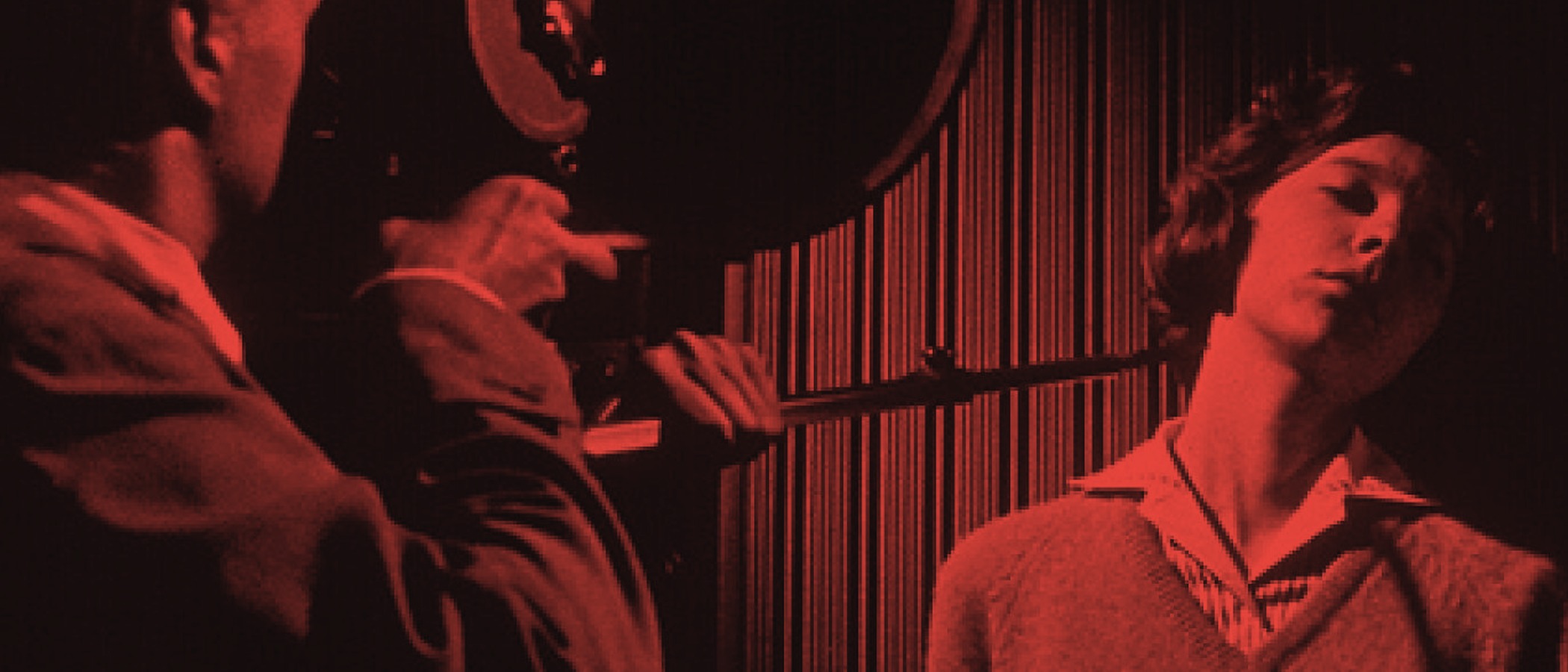
Banning a film is the surest way to guarantee everyone wants to see it. Censors throughout history have never quite grasped this fundamental irony: the moment you tell someone they can't watch something, that something becomes the most interesting thing in the world. Every banned film carries an aura of forbidden glamour, whether it deserves it or not.
Some of these bans were understandable. Some were politically motivated. Some were so ridiculous they make you wonder whether the censors had ever encountered art before. Let's dig through cinema's naughty list.
A Clockwork Orange (1971) - Banned by Its Own Director
Stanley Kubrick's adaptation of Anthony Burgess's novel wasn't banned by the British government - Kubrick himself withdrew it from UK distribution in 1973 after receiving death threats and accusations that the film was inspiring copycat violence. It remained unavailable in Britain for twenty-seven years, until after Kubrick's death in 1999.
The withdrawal created an extraordinary situation: one of the most important films in cinema history was legally available everywhere except the country where its director lived. British cinephiles had to travel abroad or acquire dodgy bootlegs to see a film that was freely available in every other Western nation. It became Britain's most famous "banned" film, even though the ban was technically voluntary.
Was the violence in A Clockwork Orange genuinely dangerous? The film is confrontational by design - Kubrick wanted audiences to be disturbed. But the idea that watching fictional ultraviolence creates real criminals has been thoroughly debunked by decades of media research. The ban was fear-based, and fear is a terrible policy advisor.
The Texas Chain Saw Massacre (1974) - Banned Practically Everywhere
Tobe Hooper's masterpiece was banned, restricted, or heavily censored in the UK, Germany, Australia, Brazil, Chile, Finland, France, Iceland, Ireland, Norway, Singapore, Sweden, and West Germany. The BBFC refused to certify it in Britain until 1999, when it finally received an 18 certificate - a quarter of a century after its original release.
Here's the absurd part: The Texas Chain Saw Massacre contains remarkably little on-screen gore. The violence is almost entirely implied through editing, sound design, and suggestion. The film's reputation as a blood-soaked splatterfest is a myth - it's actually a masterclass in psychological horror that makes your brain think it's seeing more than it is. The censors were so disturbed by the atmosphere that they assumed the content was worse than it actually was.
Hooper deliberately held back the explicit violence because he initially wanted a PG rating (ambitious, to say the least). The result is a film that's more terrifying than any amount of explicit gore could achieve, and the irony of banning a horror film for violence it barely shows is almost too perfect.
The Last Temptation of Christ (1988) - Blasphemy Panic
Martin Scorsese's adaptation of Nikos Kazantzakis's novel imagines Jesus experiencing a dream sequence on the cross in which he lives a normal human life - marrying, having children, growing old. For this, the film was banned in multiple countries, had cinemas firebombed, and generated protests so intense that some theatres refused to show it.
The controversy was driven almost entirely by people who hadn't seen the film. The "last temptation" is literally presented as Satan's final attempt to break Jesus - a temptation that Jesus rejects in order to fulfil his divine purpose. The film is arguably more reverent than many conventional biblical epics, because it takes Christ's humanity seriously enough to show him struggling with doubt. A Jesus who never doubts isn't courageous; he's just following a script.
But nuance doesn't survive contact with religious outrage. The protests were based on a one-sentence summary of the film's premise, and that was enough to get it banned in Singapore, the Philippines, Chile, Argentina, Mexico, Turkey, and parts of the United States. Scorsese, himself a devout Catholic, was bewildered by the reaction to what he considered a deeply spiritual film.
Monty Python's Life of Brian (1979) - The Messiah Mix-Up
Speaking of religious outrage: Life of Brian was banned in Ireland, Norway, and parts of Italy for blasphemy. The ban in Norway lasted until 1980 - Sweden gleefully marketed the film as "The film so funny it was banned in Norway." The response from the Pythons was characteristically blunt: Brian isn't Jesus. He's a bloke born in the manger next door. The film explicitly shows Jesus delivering the Sermon on the Mount - accurately and respectfully - before pivoting to the people at the back who can't hear properly.
The real target of Life of Brian isn't religion - it's the human tendency to follow blindly, to create cults of personality, to seek messiahs rather than thinking for ourselves. "You're all individuals!" "Yes, we're all individuals!" The People's Front of Judea isn't mocking Christianity; it's mocking factional politics. But when your film features crucifixion sung to "Always Look on the Bright Side of Life," you're going to upset some people regardless of your actual intent.
Cannibal Holocaust (1980) - The Director Was Arrested
Ruggero Deodato's Cannibal Holocaust is perhaps the only film whose director was arrested and charged with murder because the effects were too convincing. Italian courts genuinely believed the on-screen deaths were real. Deodato had to produce the actors - alive and well - in court to prove he hadn't actually killed anyone.
The film was banned in over 50 countries, and much of the controversy was entirely justified. While the human deaths were faked, the animal killings were real - seven animals were actually killed on camera during production. This isn't clever filmmaking or boundary-pushing art; it's animal cruelty documented on celluloid. The film's commentary on media exploitation loses its moral authority when it engages in the exact exploitation it claims to critique.
Cannibal Holocaust is frequently cited as an important precursor to found footage horror. That's true. It's also a film whose production ethics were genuinely reprehensible. Both things can be true simultaneously, and any discussion of the film that ignores the animal cruelty is intellectually dishonest.
The Exorcist (1973) - Britain's Longest Running Home Video Ban
William Friedkin's horror masterpiece was banned on home video in the UK from 1988 to 1999 under the Video Recordings Act - eleven years during which British audiences couldn't legally watch one of the greatest horror films ever made in their own homes. The theatrical version remained available, creating the bizarre situation where you could watch The Exorcist in a cinema but not on your sofa.
The ban was part of the wider "video nasties" moral panic of the 1980s, in which the British establishment convinced itself that horror VHS tapes were corrupting the nation's youth. The BBFC's reasoning was that home viewing lacked the "controlled environment" of a cinema, which apparently meant that Regan's head-spinning was fine on a big screen but dangerous on a 14-inch television. Logic was not the panic's strong suit.
Battle Royale (2000) - Too Close to Home
Kinji Fukasaku's Battle Royale - in which a class of Japanese schoolchildren are forced to fight to the death by their government - was never officially banned in the United States, but it was effectively suppressed. No American distributor would touch it after the Columbine massacre, and it remained without a proper US release until 2012.
The film was a massive hit in Japan, where it was rated R-15 (equivalent to a 15 certificate) and widely discussed as a satire of Japan's intensely competitive education system. The Western squeamishness around the premise is understandable but misguided - the film is clearly an allegory, not an instruction manual. By the time The Hunger Games covered essentially the same territory with a PG-13 rating, the cultural hypocrisy was complete.
Freaks (1932) - Banned for Being Too Real
Tod Browning's Freaks was banned in the UK for thirty years because it featured real sideshow performers - people with actual physical disabilities and conditions - as its cast. The British censors argued that showing these performers on screen was exploitative and offensive.
The irony is devastating: the film itself is a sympathetic portrayal of the sideshow community, with the "normal" characters as the villains. The performers were professional entertainers who chose to appear in the film and were paid for their work. Banning the film on their behalf - denying them visibility, employment, and artistic participation because their appearance made censors uncomfortable - was arguably far more exploitative than anything in the film itself.
Freaks has since been recognised as a masterpiece of early horror and a genuinely progressive film for its era. The "one of us" chant remains one of cinema's most powerful moments. The censors who banned it were protecting their own sensibilities, not the performers' dignity.
Persepolis (2007) - Banned in Iran for Telling the Truth
Marjane Satrapi's animated autobiography about growing up during the Iranian Revolution was banned in Iran, Lebanon, and Tunisia. In Iran's case, the ban was overtly political - the film depicts the Islamic Revolution and its aftermath through the critical eyes of someone who lived through it, showing the regime's oppression, violence, and hypocrisy.
Banning Persepolis inadvertently proved the film's central thesis: that authoritarian regimes cannot tolerate personal narratives that contradict official mythology. The Iranian government's objection wasn't that the film was inaccurate - it was that it was too accurate, told from a perspective they couldn't control. There is no greater endorsement of a film's power than a government trying to suppress it.
The Pattern of Censorship
Looking across the history of film banning, a clear pattern emerges: censors consistently misjudge what's actually dangerous. They ban horror films while ignoring propaganda. They suppress sexual content while celebrating violence. They target independent provocations while waving through studio-produced conformity.
The truly dangerous films - the ones that change how people think about power, identity, and justice - are rarely the ones that get banned. Leni Riefenstahl's Triumph of the Will (1935), one of the most effective propaganda films ever made, is freely available worldwide. Meanwhile, a comedy about a man who isn't the Messiah was banned in Norway for blasphemy.
Censorship tells you more about the censor than the film. What a society chooses to suppress reveals its anxieties, its insecurities, and its priorities. And the consistent lesson of cinema history is that banning a film doesn't kill it - it makes it immortal. Every "banned" label is a dare, and audiences will always take the dare.
Related Articles
- Horror Movies That Are Actually Scary - The ones that genuinely disturb
- Movies That Changed Laws - When cinema becomes activism
- Films That Created Conspiracy Theories - When film bleeds into reality
- Movies That Somehow Got Made - Against all odds and good sense