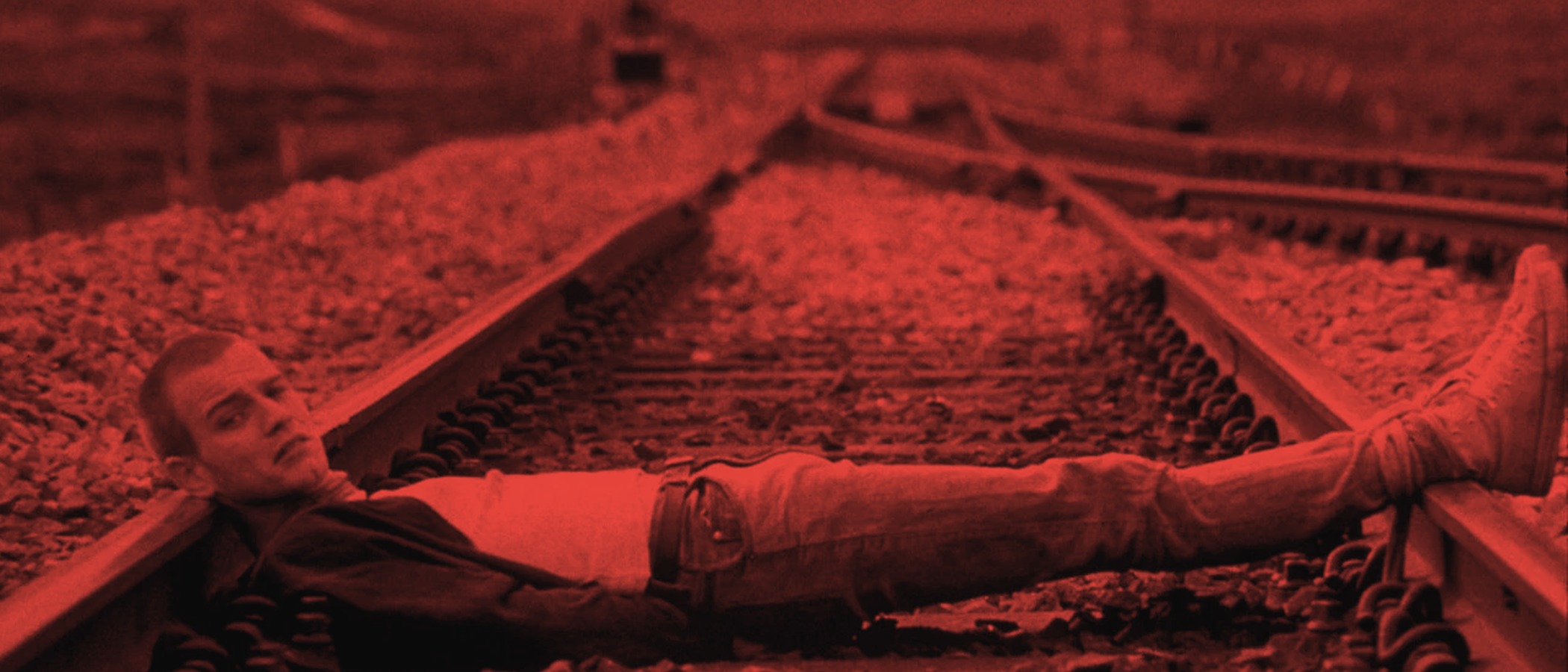
Before Trainspotting, British cinema in the 1990s was essentially two things: Merchant Ivory period dramas and Mike Leigh kitchen-sink miserabilism. Both had their merits. Neither spoke to anyone under 40. When Danny Boyle's adaptation of Irvine Welsh's novel hit cinemas in 1996, it didn't just introduce a new aesthetic - it detonated a bomb under the entire British film industry.
Choose life. Choose a career. Choose sitting on that couch watching mind-numbing, spirit-crushing quiz shows. Or choose to understand why this film mattered so much.
The Source Material
Irvine Welsh's 1993 novel was already a phenomenon. Written in dense Edinburgh dialect, it told the stories of Mark Renton, Sick Boy, Spud, Begbie, and Tommy - a group of heroin addicts and their associates in Leith, Edinburgh's roughest neighbourhood. The book was funny, horrifying, and written with a literary ambition that transcended its subject matter. Welsh wasn't just writing about junkies. He was writing about Thatcher's Britain, about a generation abandoned by the state, about people choosing heroin because the alternative - legitimate life in post-industrial Scotland - was somehow worse.
The challenge was always going to be translating that voice to screen. The dialect alone would alienate most audiences. The subject matter was genuinely shocking. And the novel's structure - multiple perspectives, non-linear timeline, stream-of-consciousness passages - wasn't exactly screenplay-friendly.
Danny Boyle's Vision
Boyle's genius was understanding that Trainspotting shouldn't be a grim, worthy drug film. He'd already shown a talent for energetic filmmaking with Shallow Grave (1994), and he brought that same kinetic energy to Welsh's world. The result was a heroin film that felt like it was on speed.
The visual style was unprecedented in British cinema. Boyle used every trick in the book - sped-up footage, surreal fantasy sequences, direct-to-camera addresses, impossible camera angles - and invented a few new ones. The "worst toilet in Scotland" scene, where Renton dives into a filthy toilet bowl and enters an underwater fantasy, is the moment British cinema stopped playing it safe. Nothing like it had been attempted before, and the audacity of it announced that the rules had changed.
But Boyle was smart enough to ground the visual pyrotechnics in human truth. Baby Dawn crawling on the ceiling is horrifying because it's a drug hallucination born from genuine tragedy - the neglect and death of a real baby. The detox sequence - Renton locked in his childhood bedroom, hallucinating dead friends and game shows - works because Ewan McGregor's performance is so physically committed that you can almost feel the withdrawal.
The Cast
The casting was, in hindsight, one of the greatest assemblages of then-unknown talent in cinema history. Ewan McGregor as Renton - charming, selfish, weirdly likeable despite being a heroin addict who steals from everyone he knows. Robert Carlyle as Begbie - not a junkie but arguably the most dangerous character, a psychopath who drinks instead and is somehow worse. Jonny Lee Miller as Sick Boy - the Sean Connery-obsessed schemer. Ewen Bremner as Spud - the gentle idiot, the heart of the group. Kevin McKidd as Tommy - the healthy one, the one who was going to be fine.
Every single one of them became a star. McGregor went to Hollywood and got Star Wars. Carlyle got The Full Monty and Bond villain status. Miller got American television and eventually Elementary. Even Bremner and McKidd built sustained international careers. The film was a factory for talent because Boyle cast people who could act rather than people who were already famous, and that gamble paid off spectacularly.
The Soundtrack
Let's be clear: the Trainspotting soundtrack didn't just accompany the film. It defined it. Iggy Pop's "Lust for Life" over the opening chase. Underworld's "Born Slippy" over the finale. Lou Reed's "Perfect Day" during the overdose scene - a choice so inspired it transformed the meaning of the song permanently. Blur, Pulp, Elastica, New Order, Brian Eno - the soundtrack was essentially a Britpop compilation that also happened to be the score for a heroin movie.
The album sold millions. It introduced the concept of the "cool soundtrack" to a generation of British filmmakers, and its influence is audible in every British film since that's used music as a narrative tool rather than background noise. Without Trainspotting's soundtrack, there's no Lock, Stock soundtrack, no Snatch soundtrack, no Edgar Wright needle drops. It rewired how British films use music.
Tracking your film journey? Our 100 Movies Bucket List Poster is the perfect way to scratch off the classics.
The Political Dimension
Welsh's novel was explicitly political, and Boyle didn't shy away from that. Renton's famous monologue - "It's shite being Scottish" - is a genuine political statement about national identity, class, and the legacy of Thatcherism. The characters aren't junkies because they're weak. They're junkies because their country failed them. The dole office, the council estates, the dead-end jobs - these are the alternatives to heroin, and the film has the guts to suggest that heroin might genuinely seem preferable.
This was controversial in 1996. The tabloids accused the film of glamorising drug use, which rather missed the point. Yes, Boyle made heroin look seductive - that's precisely why people take it. But he also showed a dead baby, a dead friend, a near-fatal overdose, and a squalid, wasted life. The film's honesty about both the appeal and the devastation of addiction was what made it authentic. Safe, preachy anti-drug messaging would have been dishonest, and audiences would have seen through it instantly.
The Aftermath
Trainspotting made $72 million worldwide on a $2 million budget. It was the most commercially successful British film since Four Weddings and a Funeral, which it couldn't have been more different from. The success proved to the British film industry that there was a global audience for gritty, contemporary, distinctly British stories told with visual invention and confidence.
The ripple effects were enormous. Lock, Stock and Two Smoking Barrels (1998) took Trainspotting's energy and applied it to London gangster culture, launching the golden age of British gangster cinema. Human Traffic (1999) did the same for Cardiff rave culture. Ratcatcher (1999) proved Scottish cinema could go even darker. An entire generation of British filmmakers saw Trainspotting and thought: we can do this. We can make films about our world, in our language, with our energy, and the world will watch.
Without Trainspotting, the last 30 years of British cinema look completely different. It was the big bang, the Year Zero. Everything since has been living in its blast radius.
T2 Trainspotting (2017) was a worthy sequel that no one thought was possible. But that's another story.