A corridor is the cheapest set in the building and the hardest place to stage a fight. There is no room to cut around a bad punch. The camera has two directions to choose from. The hero cannot run, so the only way out is through. That is why, over the last thirty years, the corridor has quietly become the proving ground for action directors. If you can make a hallway sing, you can do anything.
These are the ten that changed the rules, in the order they arrived.
1. Hard Boiled (1992): the hospital
John Woo ends his Hong Kong career with a hospital under siege and a corridor shot that runs for well over two minutes without a cut, following Chow Yun-fat and Tony Leung through a lift, along a hallway, through a ward, and back again while the building comes apart around them. It was done with a handheld camera and a crew running backwards. Every long-take corridor since owes it a drink. The teahouse shootout that opens the film is the other reason to watch it.
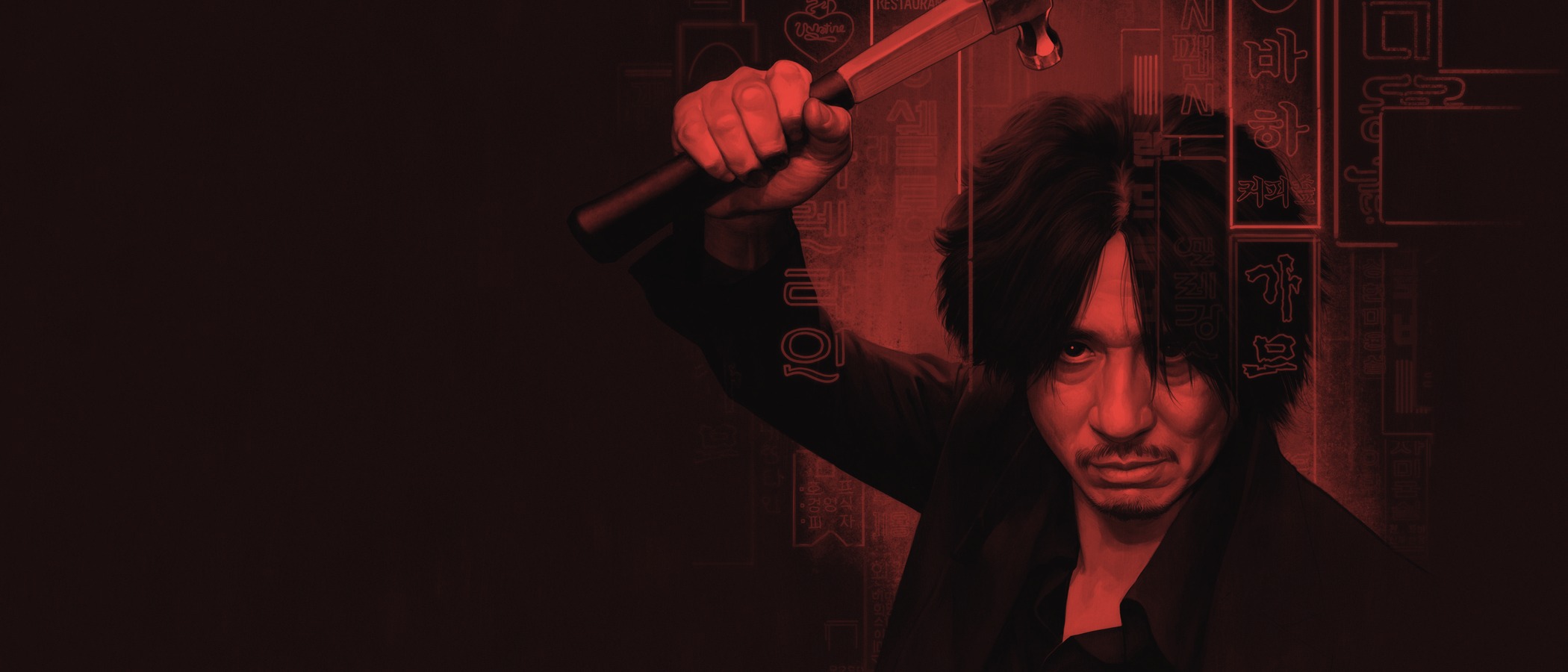
2. Oldboy (2003): the hammer
Park Chan-wook shoots Choi Min-sik against a hallway full of thugs in a single side-on take, like a scrolling beat-em-up, with a hammer, a knife sticking out of his back and no music. It took three days and seventeen takes. See the Oldboy film page for the rest of the story. The genius is that it is not a display of skill. Oh Dae-su is tired, sloppy and hurt, and he wins because he will not stop. It is the most copied shot on this list and nobody has matched it.
3. The Protector (2005): the staircase
Tony Jaa climbs four floors of a restaurant in one four-minute take, breaking everyone he meets, while the camera follows him up the spiral. Prachya Pinkaew reportedly did it five or six times before it worked. The stunt team are real, the falls are real, and the take was shot on a Steadicam so heavy the operator had to be relieved between attempts.
4. Inception (2010): the rotating hallway
Christopher Nolan built a hotel corridor inside a rotating drum a hundred feet long and put Joseph Gordon-Levitt in it. As the dream shifts, the hallway turns, the fight goes up the walls and onto the ceiling, and the actors are actually doing it. It is the only entry here where the corridor is the enemy.
5. The Raid (2011): the hallway
Gareth Evans, a Welshman working in Jakarta, sends Iko Uwais up a tower block through a hallway of machete gangs, and the fight style, pencak silat, had never been filmed like this: fast, low, and lethal. The camera whips through doorways and follows blades into walls. If you have somehow not seen it, fix that tonight. It rewired what Western studios thought was possible for a million dollars.
6. Dredd (2012): the block
Most of Dredd is corridors, because Mega-City One is a two-hundred storey tower with the doors sealed. Pete Travis and Alex Garland use the geometry brilliantly, with Karl Urban clearing hallways floor by floor while Ma-Ma's people funnel towards him. The slow-motion sequences turn a concrete passage into stained glass.
7. Kingsman: The Secret Service (2014): the church
Not strictly a corridor, but it is one long aisle, which counts. Matthew Vaughn stitches dozens of takes into what looks like one, with Colin Firth working through a congregation to Free Bird. It is the moment the film tells you it has no brakes.
8. Daredevil (2015): the hallway
A television entry, but it belongs here. The first season's hallway fight, one take, three minutes, Charlie Cox breathing harder with each thug, was the Oldboy homage that made the whole streaming era of action start paying attention to stunt teams. Its sequel in the prison, season three, is even longer.
9. Atomic Blonde (2017): the stairwell
David Leitch, one of the two directors of the first John Wick, gives Charlize Theron a ten-minute stairwell and apartment fight that plays as a single take. It is not one take. It is around forty, hidden by whip pans and doorframes, and knowing that makes it more impressive, not less. Nobody has made exhaustion look this good.
10. John Wick: Chapter 4 (2023): the stairs
Two hundred and twenty two steps up to Sacre Coeur, Keanu Reeves fighting up them and then falling all the way back down. Chad Stahelski was one of the stunt doubles on The Matrix and has spent four films turning the corridor fight into an argument about how much a person can take. This is the closing statement.
Why it works
Three reasons. First, a corridor gives the audience the geography for free. You always know where the hero is, where the threat is coming from and how far there is to go, which is more than most action films manage in an open space. Second, it forces the choreography to be honest. There is nowhere to hide a stunt double and no room for the camera to lie. Third, it turns the fight into a story with a shape. Start at one end, get to the other, pay for every metre.
Which is why the best corridor fights are never about the hero being unstoppable. They are about the hero being exhausted and going anyway. Test yourself on the Frame a Day: three of these ten have turned up as the daily frame.