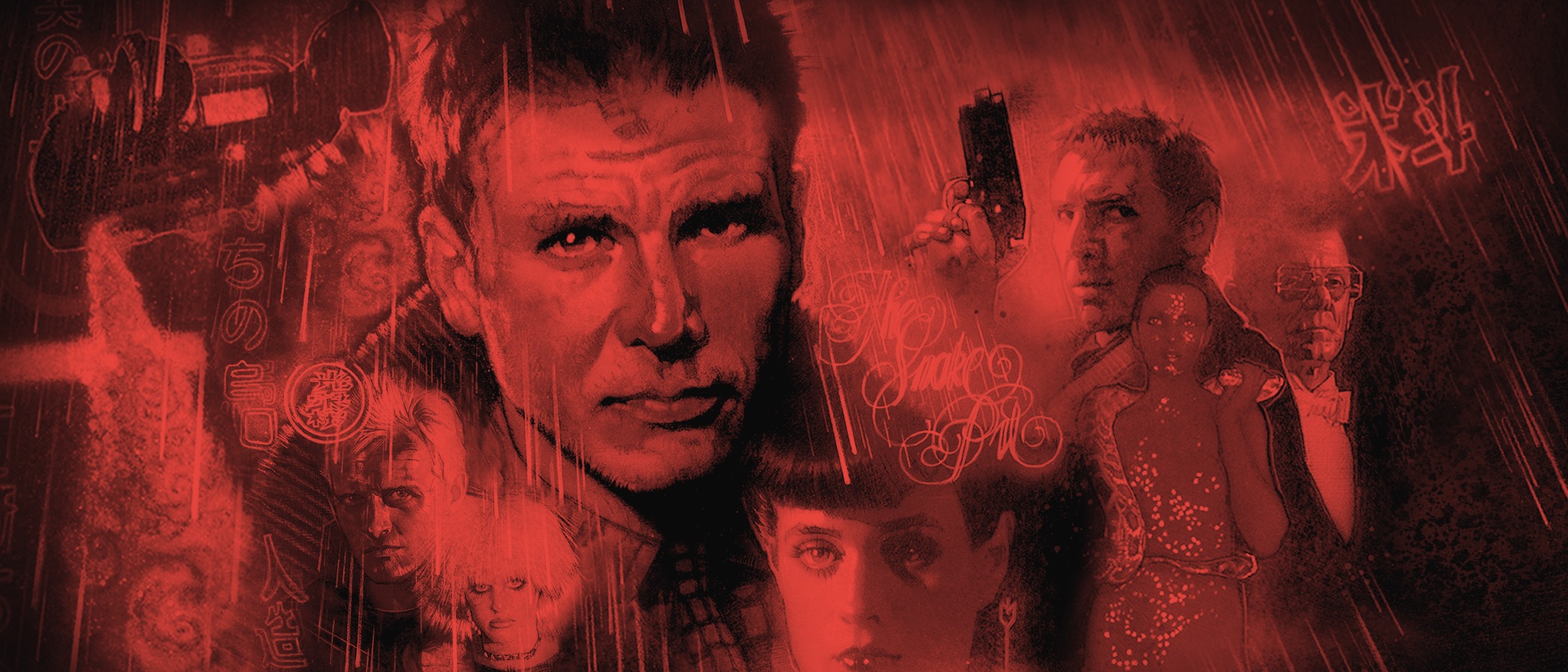
Frame a Day is the simplest game on the site. One still from a film, five guesses, the same frame for everyone. It is also the one people message us about most, usually with a screenshot and the words "how is anyone getting this". So here is how. None of it involves a reverse image search, which is not so much cheating as missing the point.
Start with the shape of the frame
Before you look at what is in the picture, look at the picture. A very wide frame, roughly two and a third times wider than it is tall, means anamorphic or a big-budget epic: Lawrence of Arabia, the Star Wars films, most Bond, almost everything by Spielberg since the eighties. A squarer frame, closer to four by three, means either something old, something television, or something deliberately old-fashioned like The Lighthouse or The Grand Budapest Hotel's flashback scenes. The slightly-wide frame in between is the default for most films from the seventies to now, so it narrows less, but it rules out the extremes.
Read the grain
Film stock has texture. Digital does not, unless it has been added, and added grain looks too even. Heavy grain with soft colour usually means the seventies. Fine grain with strong, saturated colour means the eighties and nineties, when Kodak stocks got faster and cleaner. A frame that is perfectly clean with deep blacks and no noise at all is almost certainly from the last fifteen years, and probably shot on an Alexa. If it is clean but the colours look slightly unnatural, that is early digital, roughly 2002 to 2010, and it narrows things quickly.
Look at the light
Cinematographers have signatures. Soft, warm, top-lit interiors with amber practicals are Gordon Willis, which means Coppola or Woody Allen in the seventies. Hard, blue-white light with long shadows is Michael Mann and Dante Spinotti. Green tints are The Matrix and almost everything Fincher did before 2010. Orange skin against teal backgrounds is 2005 to 2015 and means a studio film with a big grade. Candles that actually light the scene are Barry Lyndon and almost nothing else. Once you have seen these a few times you cannot unsee them.
Haircuts and collars
Costume tells you the setting but hair tells you when the film was made, because nobody ever gets period hair right for their own era. Look at the extras, not the leads. A film set in 1920 with extras who have 1990s eyebrows was made in the 1990s. Collar width, lapel width and the amount of hairspray on background women will place a film within five years almost every time.
Flares and formats
Horizontal blue streaks across a light source are anamorphic lenses, and in the last twenty years they mean either a big studio film or a director who wanted it to look like one. A hard vignette at the corners with a slight blur is a vintage lens on a digital sensor, which is the last decade's favourite trick. Very shallow focus with creamy backgrounds is either a modern full-frame camera or a very expensive old lens, and either way it is recent.
What is on the walls
Set dressing is where the game is won on hard days. A rotary phone with a specific colour, a car badge, a font on a shop sign, a television with a particular curve to the glass. Production designers are obsessive about these things and the film usually tells you where and when it is set within a frame or two, if you stop looking at the actor's face.
Play the odds
The frame pool is curated, which is a polite way of saying it has taste. It leans to the films on our films page: cult, arthouse, British, and the American classics everyone agrees on. If the frame looks like a nineties British estate, guess Nil by Mouth before you guess Notting Hill. If it looks like a corridor with a man holding a hammer, you know what to do.
Use your five guesses properly
Each wrong guess reveals a little more, so do not throw a guess away. Use the first one to test a decade, the second to test a director, and keep the last two for when you actually know. The share card records how many you needed, and a two-guess solve on a hard frame is the closest this site gets to a trophy.
Why bother
Because all of this is just watching properly. Every tell above is a decision someone made on set, and once you can read them in a single frame you can read them in a whole film. The regulars who solve the daily in one guess are not showing off a photographic memory. They have simply looked at a lot of films closely, which is the whole point of the place.
Today's frame is up now. Go and look at it properly.