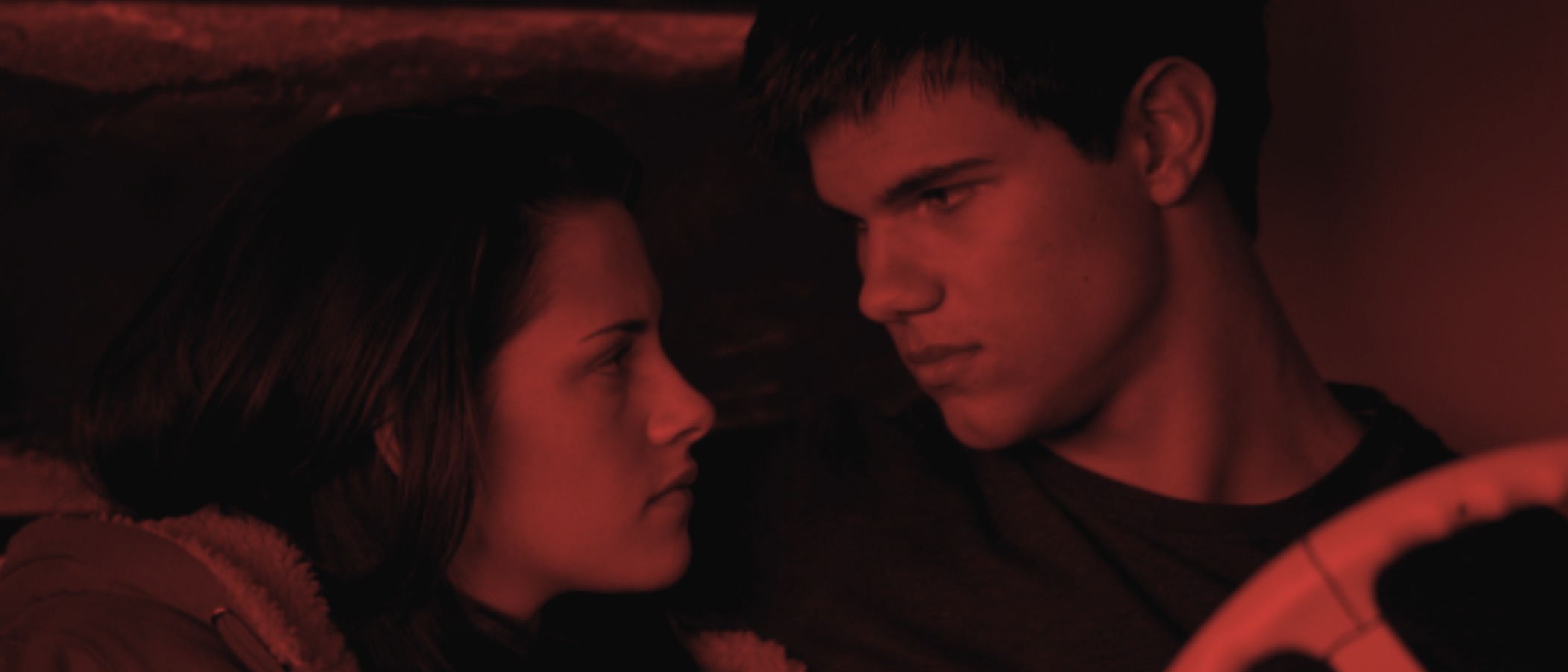
On-screen chemistry is one of those things you can't fake, can't manufacture, and can't fix in post-production. Either two actors spark off each other with an electricity that makes you believe in their connection, or they don't, and you spend two hours wondering why these people who apparently love each other look like they'd rather be filing their taxes.
Studios spend millions on scripts, sets, and marketing. They can't spend a penny on chemistry. It either exists or it doesn't, and when it doesn't, the whole film collapses like a romantic soufflé that someone's slammed the oven door on.
Here, in no particular order of awkwardness, are cinema's most romantically inert pairings.
Anakin and Padmé (Star Wars Prequels)
Hayden Christensen and Natalie Portman are both capable actors who have delivered excellent performances in other films. This is important to establish upfront because what happens between them in Attack of the Clones and Revenge of the Sith is so devoid of romantic energy that it genuinely feels like a hostage situation.
"I don't like sand. It's coarse and rough and irritating, and it gets everywhere." This is not a seduction. This is a complaint you'd make to a travel agent. The fireplace scene, the lakeside picnic, the meadow frolic - every romantic beat lands with the erotic charge of a tax return. George Lucas, for all his world-building genius, writes romance like a man who learned about human intimacy from reading instruction manuals.
The tragedy of Anakin and Padmé isn't his fall to the dark side. It's that we never for a single second believed they loved each other enough for that fall to matter.
Valerian and Laureline (Valerian and the City of a Thousand Planets)
Dane DeHaan and Cara Delevingne in Luc Besson's eye-wateringly expensive sci-fi spectacular had all the sexual tension of two people waiting for the same bus. DeHaan - a perfectly good actor in roles that require intensity and vulnerability - was catastrophically miscast as a roguish space agent. He delivers his flirtatious lines with the conviction of a man reading them off cue cards for the first time. Delevingne responds with the enthusiasm of someone who's already mentally planning her exit.
The film cost $177 million and made its money back approximately never. There are many reasons for its failure, but the central romance being about as hot as a fridge in December didn't help.
Christian and Anastasia (Fifty Shades of Grey)
Here's a film franchise explicitly about sexual obsession starring two lead actors who reportedly couldn't stand each other. Jamie Dornan and Dakota Johnson have the on-screen chemistry of two magnets with the same polarity - the closer you push them together, the more aggressively they repel. Dornan plays Christian Grey with the brooding intensity of a man who's been told to look sexy but is actually thinking about what he's having for dinner. Johnson - who's genuinely charming in everything else - looks perpetually trapped.
The franchise made $1.3 billion worldwide, which proves that brand recognition will always trump chemistry. But imagine what those films could have been with two actors who actually wanted to be in the same room.
Ben Affleck and Jennifer Lopez (Gigli)
The irony is almost too delicious. Affleck and Lopez were one of the most photographed real-life couples on the planet. Their actual chemistry was undeniable. And yet Gigli (2003) - the film specifically designed to capitalise on their relationship - produced scenes so romantically flat that audiences laughed at the sex scenes. "It's turkey time. Gobble gobble." That's an actual line from the film's seduction sequence. We're not making that up. We wish we were.
Gigli is widely regarded as one of the worst films ever made, and the central romance - which should have been the easiest layup in Hollywood history - is a major reason why. Sometimes being a real couple makes screen romance harder, not easier. The self-consciousness is palpable.
Katie Holmes and Christian Bale (Batman Begins)
Katie Holmes as Rachel Dawes and Christian Bale as Bruce Wayne are supposed to be each other's great love - the relationship that anchors Batman's humanity. Instead, they interact with the warmth of colleagues who've been forced to share a desk. Holmes delivers her lines competently but without any apparent interest in Bale's existence, and Bale - admittedly more focused on the cape and the growling - reciprocates by treating their scenes together like contractual obligations.
When Maggie Gyllenhaal replaced Holmes in The Dark Knight, the chemistry didn't exactly ignite, but at least you believed these two people had met before. The fact that Rachel's death is one of the trilogy's emotional centrepieces while neither actress generated genuine romantic sparks with Bale is a testament to everything else those films get right.
Keanu Reeves and Winona Ryder (Bram Stoker's Dracula)
Two beloved actors. One of cinema's great romantic horror stories. Zero chemistry. Reeves - gorgeous, likeable, but not exactly Olivier - delivers his English accent like a man who learned it from a phrasebook on the plane over. Ryder does her best but looks like she's waiting for someone more interesting to walk through the door. Meanwhile, Gary Oldman as Dracula is generating enough erotic menace to power a small city, making the central love triangle feel distinctly lopsided.
The irony is that Reeves and Ryder have great chemistry in real life - they're famously friendly, and there's an ongoing joke about whether they're actually married due to a ceremony scene in the film being conducted by a real priest. On screen, though? Dead. Undead. Whatever.
Orlando Bloom and Keira Knightley (Pirates of the Caribbean)
Bloom and Knightley as Will Turner and Elizabeth Swann are technically the romantic leads of the Pirates franchise, but both of them know - and we know - and they know we know - that Johnny Depp's Captain Jack Sparrow is the reason anyone bought a ticket. Their romance is dutiful, chaste, and about as exciting as watching paint dry on a galleon. Will is earnest. Elizabeth is fiery. Together they are somehow less than the sum of their parts.
The trilogy keeps insisting we care about their love story while simultaneously letting Depp eat every scene with a mouthful of gold teeth. It's a structural problem: you can't build a romance around two characters who are both playing straight man to the comedian.
Why Chemistry Is Alchemy
The frustrating truth is that no one knows why chemistry works. Some of cinema's greatest pairings - Bogart and Bacall, Hepburn and Tracy, Grant and Russell - weren't designed by committee. They happened. The camera caught something between two people that nobody planned, and magic appeared.
You can't audition for chemistry. You can't rehearse it. You certainly can't write it into a script - George Lucas proved that beyond all reasonable doubt. It exists in the glances between lines, the physical awareness actors have of each other, the way one person's rhythm adjusts to another's. It's the most important element in any screen romance, and it's the one thing money can't buy.
So the next time a film tells you two characters are madly in love and your response is "are they, though?" - trust your instincts. Your gut knows chemistry when it sees it. And more importantly, it knows when it's missing.
Related Articles
- Actors Who Only Play Themselves - When the star is always just... them
- Movies That Somehow Got Made - Hollywood's most baffling greenlights
- Oscar Snubs That Still Piss Us Off - The awards the Academy got spectacularly wrong
- Rewatching 90s Movies That Aged Badly - The ones that didn't survive the decades
- Character Actors: Faces You Know, Names You Don't - The real stars of cinema