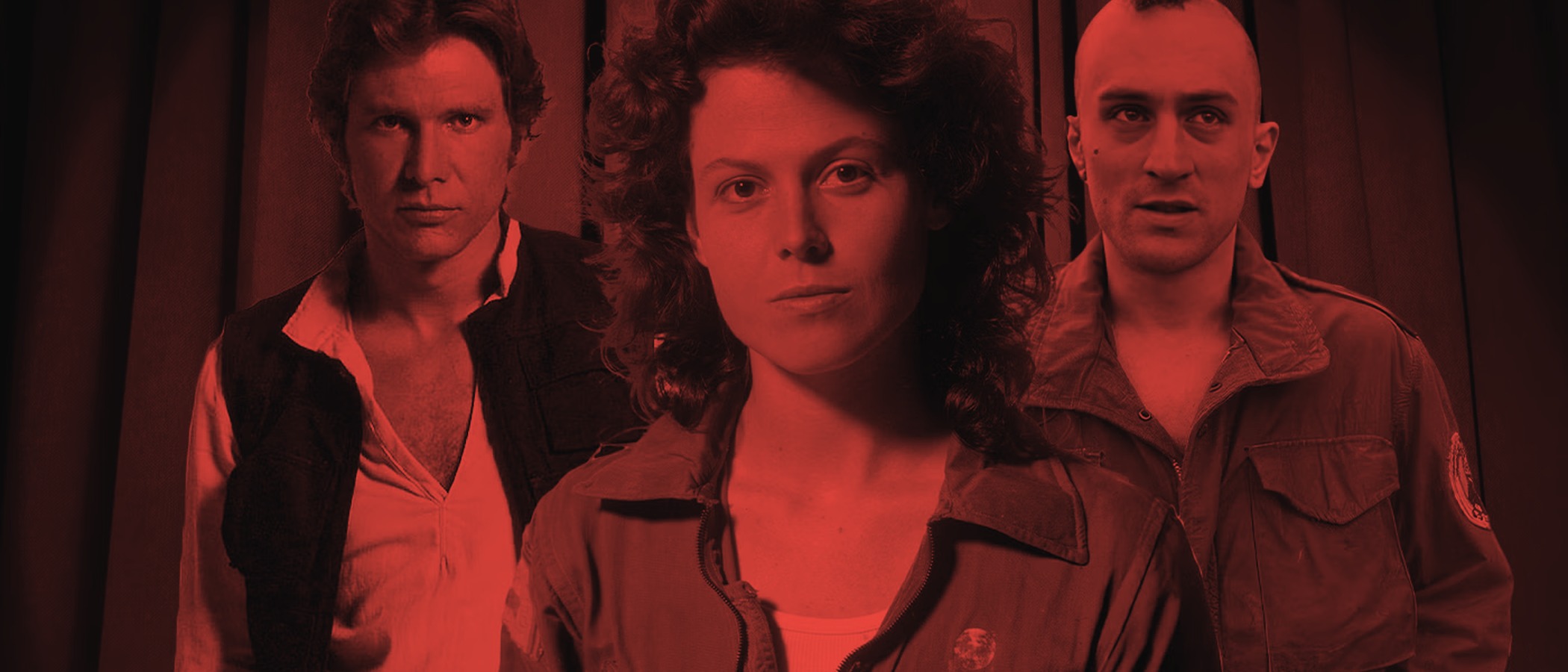
Every iconic performance exists on a knife edge. For every role that defines an actor's career - and sometimes an entire genre - there's an alternate timeline where someone else got the part and cinema looked completely different. These near-misses, turned-down offers, and last-minute replacements reveal just how contingent film history actually is.
Some of these what-ifs would have improved the final product. Most would have diminished it. All of them are fascinating to contemplate.
Welcome to the multiverse of missed castings.
Will Smith as Neo - The Matrix (1999)
Will Smith was offered the role of Neo and turned it down to make Wild Wild West. Let that sentence marinate. One of the biggest movie stars on the planet chose a steampunk Western based on a 60s TV show over the most revolutionary science fiction film since Blade Runner.
To be fair to Smith, he's said that the Wachowskis' pitch was so conceptually ambitious that he didn't understand what the film would actually be. "I would have messed it up," he's admitted, which is probably accurate. Smith's charisma is enormous but external - he radiates outward. Keanu Reeves' Neo works because of his interior blankness, the sense that this is a man who doesn't quite belong in any reality. Smith would have made a more conventional action hero; Reeves made an icon.
Tom Selleck as Indiana Jones - Raiders of the Lost Ark (1981)
Tom Selleck was Steven Spielberg's first choice for Indiana Jones, and he reportedly wanted the role desperately. But CBS wouldn't release him from his Magnum, P.I. contract, and Harrison Ford - George Lucas's choice from the beginning - stepped in.
Selleck would have been fine. He had the physicality, the moustache (which would presumably have been shaved), and the easy charm that the role requires. But Ford brought something Selleck likely couldn't: that perfect balance of competence and vulnerability, the sense that Indiana Jones is genuinely terrified half the time but too stubborn to stop. Ford made Indy human. Selleck would have made him handsome. There's a difference.
Al Pacino as Han Solo - Star Wars (1977)
George Lucas considered Al Pacino for Han Solo. Al Pacino. The man who would go on to define intense, method-driven dramatic acting was nearly cast as cinema's most charming rogue. Pacino has said he turned it down because he "didn't understand the script," which is the most Al Pacino reason imaginable.
A Pacino Han Solo would have been a fundamentally different character - darker, more intense, probably terrifying. The breezy, self-amused quality that Harrison Ford brought - the raised eyebrow, the crooked grin, the sense that Han is always slightly laughing at everything - would have been replaced by... what? Method-acted smuggling? Shouty co-piloting? The mind recoils.
Sean Connery as Gandalf - The Lord of the Rings (2001-2003)
Peter Jackson offered Sean Connery the role of Gandalf. Connery reportedly turned it down because he "didn't understand the material." This from the man who subsequently appeared in The League of Extraordinary Gentlemen, a film that nobody understood, including the people who made it.
Ian McKellen's Gandalf is so definitive that imagining anyone else in the role feels like heresy. McKellen brought Shakespearean gravitas, genuine warmth, and a twinkle in the eye that made Gandalf simultaneously the most powerful and most approachable character in the trilogy. Connery would have brought... a Scottish accent and the constant suspicion that he was about to karate chop an orc. Different energy.
Jack Nicholson as Michael Corleone - The Godfather (1972)
Paramount wanted anyone but Al Pacino for Michael Corleone. The studio pushed Jack Nicholson, Robert Redford, Warren Beatty, and Ryan O'Neal - all bigger names, all more bankable. Francis Ford Coppola fought for Pacino and nearly lost his job over it.
Nicholson as Michael is the most intriguing of these alternatives. He had the intensity, the intelligence, and the capacity for darkness. But Michael's arc - from reluctant outsider to ruthless don - requires an actor who can play innocence convincingly, and Nicholson has never once in his career looked innocent. He was born looking like he'd just done something terrible and was quite pleased about it. Pacino's transformation from the quiet war hero to the cold-eyed patriarch remains the greatest character arc in American cinema. Nicholson would have started where Pacino ended.
Emily Blunt as Black Widow - Iron Man 2 (2010)
Emily Blunt was cast as Black Widow before Scarlett Johansson. A scheduling conflict with Gulliver's Travels forced her to drop out, which may be the most unfortunate scheduling conflict in cinema history - she lost a decade-long franchise role to appear in a Jack Black film nobody remembers.
Blunt would have been extraordinary. Her work in Sicario, Edge of Tomorrow, and A Quiet Place demonstrates exactly the kind of steely, physical, emotionally complex performance that Black Widow deserved and, arguably, never quite received. Johansson was good in the role, but Blunt might have made the character genuinely dangerous rather than merely competent.
Leonardo DiCaprio as Patrick Bateman - American Psycho (2000)
DiCaprio was attached to play Patrick Bateman before Christian Bale. His involvement was so advanced that director Mary Harron was replaced (briefly) when she objected to DiCaprio's casting, feeling he was too young and too famous for the role's satirical intent.
Harron was right. Bale's Bateman works because he embodies the hollow perfection of the character - the gym-sculpted body, the obsessive grooming, the absolute vacancy behind the eyes. DiCaprio at 25 was too beautiful, too naturally charismatic, and too sympathetic to make Bateman's emptiness register as horror rather than glamour. Bale made you uncomfortable; DiCaprio would have made you swoon. And that's the wrong response to a serial killer.
John Travolta as Forrest Gump - Forrest Gump (1994)
John Travolta turned down Forrest Gump to make Pulp Fiction, which turned out to be one of the greatest career decisions in Hollywood history - Pulp Fiction resurrected his career spectacularly. But the thought of Travolta as Gump is genuinely interesting.
Travolta has a warmth and an earnestness that could have served the character, but Tom Hanks brought something essential: the ability to play simplicity without condescension. Hanks' Gump never feels like an actor doing a voice - he feels like a complete human being, gentle and genuine and absolutely real. Travolta's performing instincts tend toward the broader and more physical, which might have tipped Gump from endearing into caricature.
Molly Ringwald as Vivian - Pretty Woman (1990)
The original Pretty Woman script, titled 3,000, was a dark drama about class exploitation, and Molly Ringwald was considered for the lead. The script was rewritten into a romantic comedy, Julia Roberts was cast, and the rest is box office history.
Ringwald in the darker version might have produced something genuinely challenging - a Brat Pack star confronting the adult realities of sex work and economic inequality. Roberts in the lighter version produced one of the most successful romantic comedies ever made. Both are valid choices. But they're such fundamentally different films that the casting decision essentially determined the genre.
OJ Simpson as The Terminator - The Terminator (1984)
James Cameron has confirmed that OJ Simpson was considered for the T-800 before Arnold Schwarzenegger. Cameron ultimately decided Simpson was "too likeable" to play a terrifying robot assassin. With the benefit of hindsight, this quote has aged in a way that makes everyone deeply uncomfortable, and we'll leave it there.
What Casting Tells Us
These what-ifs reveal something fundamental about filmmaking: casting isn't just about finding someone who can deliver the lines. It's about finding the human being whose existence - their face, their voice, their accumulated cultural associations - tells the story before they speak a word. Harrison Ford doesn't just play Indiana Jones; he is Indiana Jones, in a way that transcends performance and becomes identity.
Every great casting choice is a miracle of specificity. The wrong actor doesn't just weaken a film - they create a different film entirely. The alternate timelines mapped above aren't necessarily worse, but they're undeniably other. Different actors bring different films into existence, and the versions we got are the ones that shaped our culture.
Somewhere in the multiverse, Sean Connery is fighting a Balrog, Will Smith is dodging bullets in slow motion, and OJ Simpson is saying "I'll be back."
We got the better timeline. Mostly.
Test Your Film Knowledge
- Frame-a-Day - Identify classic films from a single screenshot
- Six Degrees Sprint - Connect these almost-cast actors
- Movie Quotes - Iconic lines from the actors who actually got the part
Related Articles
- Actors Who Only Play Themselves - When the casting IS the character
- The Death of the Movie Star - Could today's stars create these iconic roles?
- Oscar Snubs That Still Piss Us Off - The performances that should have won
- Method Actors Who Went Too Far - The extremes actors go to for the right role
- Behind the Scenes Disasters - More chaos behind the camera