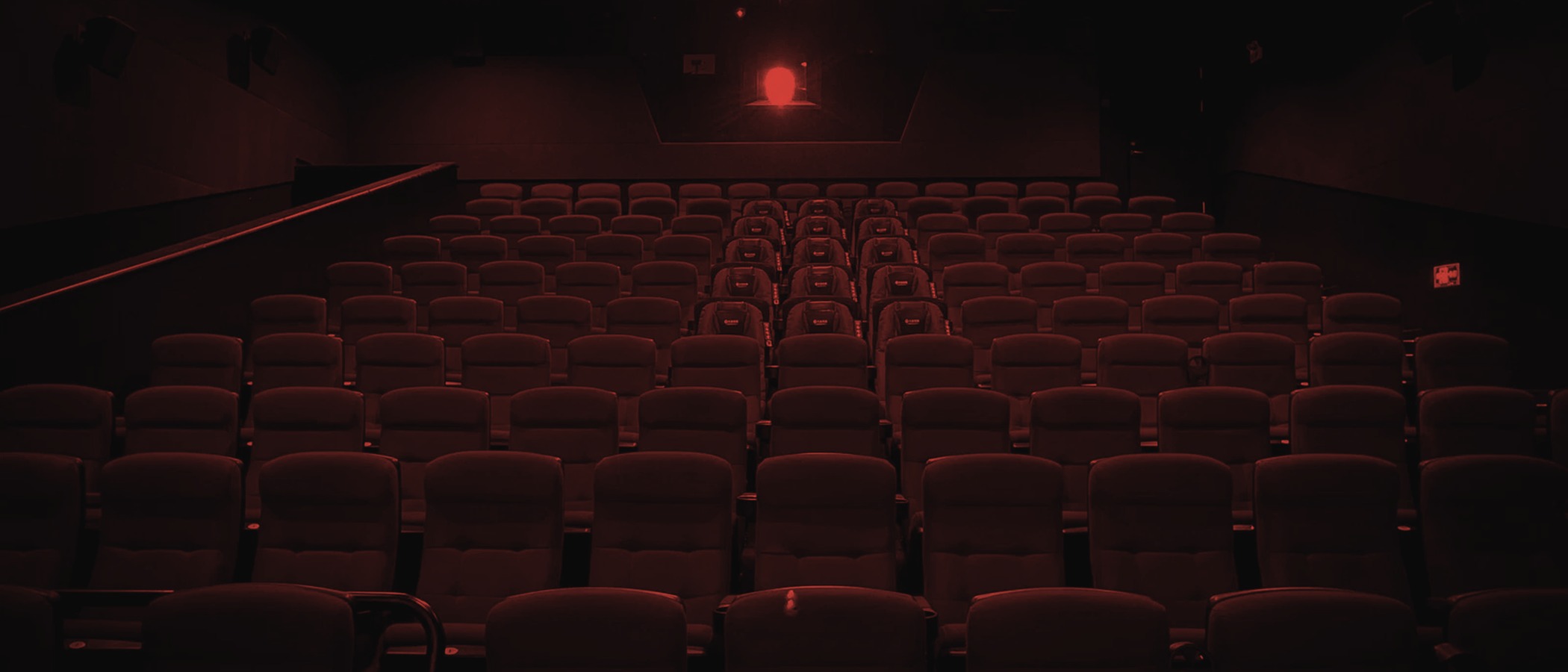
Watch Heat in a small cinema on a weekday afternoon with three other people in the room. When the bank job goes wrong on Flower Street and the rifles start, the sound comes off the walls and somebody in front of you flinches. I have seen that scene on a television twenty times and it has never once made me flinch, because a television does not have walls.
Rooms like that are closing. The multiplex down the road is fine, it has recliners and a Nando's and it shows twelve films I have no interest in. Independent cinemas in Britain are shutting faster than they are opening, and the argument for keeping them is not nostalgia. It is that a room full of strangers who have agreed to shut up and look at the same thing for two hours is a piece of technology nothing in your house can replicate. Here is what the numbers actually say, what streaming did and did not do, and what a person can usefully do about it.The Numbers Don't Lie (But They Do Depress)
Cinema attendance has been declining steadily since the early 2000s, with COVID-19 accelerating a trend that was already terminal. In the UK, admissions peaked at 176 million in 2002. By 2019, they'd dropped to 176 million... wait, that's the same number. But the UK population grew by millions in that period, meaning per-capita attendance dropped significantly. Post-pandemic, attendance has settled at roughly 70-80% of pre-COVID levels, and there's little evidence it's recovering.
In the US, the picture is starker. Box office revenue has become increasingly top-heavy, with a handful of franchise tentpoles generating the vast majority of ticket sales while everything else struggles to fill seats. The "middle" of the market - adult dramas, mid-budget thrillers, romantic comedies - has essentially been priced out of theatrical distribution. These films now go straight to streaming, which means the cinema experience is increasingly limited to superhero films, animated features, and the occasional prestige release.
Theatres are closing. AMC, Cineworld, and Regal have all faced bankruptcy proceedings. Independent cinemas - the ones with personality, curated programming, and staff who actually care about film - are disappearing at an alarming rate. The multiplex model that replaced them is itself now threatened. We're watching the infrastructure of communal film-watching disintegrate in real time.
The Streaming Paradox
Streaming didn't kill cinemas the way DVDs didn't kill cinemas. What streaming did was far more insidious: it made cinema feel optional. When every film will eventually appear on your television - usually within weeks rather than months - the urgency of theatrical viewing evaporates. Why pay fifteen quid for a ticket, six quid for a drink, and seven quid for popcorn when you can wait six weeks and watch it on your sofa for the price of a monthly subscription you're already paying?
The economics are brutal. A family of four going to the cinema costs roughly seventy pounds before anyone's eaten anything. That's a monthly streaming subscription to three services with enough content to fill every evening until the heat death of the universe. From a pure value perspective, cinema is an indefensible luxury.
But this framing - cinema as a product, measured by cost-per-hour of entertainment - misses the point so catastrophically that it makes you want to weep. Cinema was never about cost efficiency. It was about experience. And the experience of watching a film in a cinema is fundamentally, qualitatively different from watching it at home, in ways that matter deeply and are almost impossible to quantify.
What You Lose When You Watch at Home
The obvious difference is scale. A cinema screen is thirty feet wide. Your telly is, what, sixty-five inches? That's not a difference in degree - it's a difference in kind. Lawrence of Arabia on a phone is not the same film as Lawrence of Arabia on a cinema screen. You're watching the same images in the same order, but the experience is so different they might as well be different art forms.
But scale isn't even the most important thing. The most important thing is community.
When you laugh in a cinema, you hear other people laughing. When you gasp, you hear gasps. When a moment lands - truly lands - you feel the collective intake of breath, the shared emotional response of strangers united by a story. This isn't sentimental nonsense; it's measurable psychology. Emotional responses are amplified by social context. We feel more in groups than we do alone. A comedy is funnier in a full cinema. A horror film is scarier. A tragedy hits harder.
At home, you laugh alone. Or you don't laugh at all, because the thing that would have made you laugh in a cinema - riding the wave of communal response - doesn't exist on your sofa. The film is the same. You are different.
The Attention Economy Has Won
Here's the real killer: we've lost the ability to give a film our undivided attention. At home, your phone is right there. Your fridge is right there. Your pause button is right there. The average home viewer checks their phone at least once during a film - many check it dozens of times. The idea of sitting in the dark for two uninterrupted hours, with no option to pause, no temptation to scroll, no escape from the film's demands on your attention - that's become almost radical.
Cinema enforces attention. That's not a bug; it's the feature. When you can't check your phone (or at least when social convention demands you don't), you engage with the film at a depth that's impossible when distractions are available. The slow build of a Denis Villeneuve film, the lingering silences of a Barry Jenkins drama, the meticulous tension of a Hitchcock thriller - these require sustained attention to work. On a sofa with a phone in your hand, they feel slow. In a cinema, they feel deliberate.
We've trained ourselves out of the ability to be bored, and that's a disaster for art. Cinema's power comes partly from its control over your time - it decides when you see what, and you submit to its rhythm. Streaming puts you in control, which sounds liberating but actually diminishes the experience. You're not watching a film; you're managing content. There's a difference.
The Death of the Movie Event
Remember when seeing a film was an event? Not just a Friday night option, but a genuine cultural moment? The queues for Star Wars. The midnight screenings of Harry Potter. The collective experience of watching Avengers: Endgame in a packed cinema where the audience cheered, cried, and - during that portal scene - lost their collective minds?
Those moments are becoming rarer. The films that generate genuine event-level excitement are fewer and further between. And when they do happen, the theatrical window is so short that the event feeling is compressed into a few days rather than weeks or months. Endgame's theatrical dominance lasted about a month before the cultural conversation moved on. In the eighties, a big film could dominate cinemas for an entire summer.
The movie event wasn't just marketing - it was social infrastructure. People went to the cinema together. They had shared experiences to discuss. They bonded over films in a way that's impossible when everyone watches different things at different times on different screens. The fragmentation of viewing habits has fragmented our cultural conversation, and cinema was one of the last things holding it together.
What Cinema Does That Nothing Else Can
A cinema is a temple to focused attention. It's a room specifically designed to eliminate distraction and maximise immersion. The architecture, the acoustics, the darkness - everything exists to serve the film. Your living room serves a hundred different purposes. A cinema serves one. That specialisation matters.
The sound design alone justifies the price of admission. Modern cinema sound systems deliver audio at a fidelity and spatial precision that home systems can't match. The bass you feel in your chest during an action sequence. The whispered dialogue that surrounds you in a drama. The silence - actual, deep silence - that a properly calibrated cinema can deliver between beats of a horror film. Your soundbar cannot do this. Your AirPods certainly cannot do this.
And then there's the projection. A properly maintained cinema projector displaying a 4K digital print or - heaven help us - an actual film print is showing you an image at a quality level that home displays are still chasing. The dynamic range, the colour depth, the sheer luminous presence of a projected image on a massive screen is not something a television replicates. It approximates. And approximation is the enemy of art.
What We Can Do (If We Actually Care)
Support your local cinema. Actually go. Not once a year for the big Marvel thing - regularly. See the weird independent film that's only showing at 4pm on a Tuesday. Buy the overpriced popcorn. Tell them you appreciate them. Independent cinemas survive on attendance, and they die on indifference.
Choose the theatrical experience when it's available. When a film you want to see is playing in cinemas, see it in the cinema. Don't wait for streaming. The film might be "the same," but you won't be. You'll be in a room designed to make that film as powerful as possible, surrounded by people sharing the experience, with your phone firmly in your pocket. That's not the same as your sofa. It's better.
Demand that studios invest in the theatrical window. The race to streaming has shortened theatrical exclusivity to the point where cinemas can't build an audience for anything that isn't a massive franchise. A proper theatrical window - sixty to ninety days before streaming - gives films time to find their audience and gives cinemas time to keep their doors open.
And talk about cinema. Not streaming content, not prestige television - cinema. The specific, irreplaceable experience of watching a film in a darkened room with strangers. Remind people what they're losing. Because once it's gone, it's not coming back. There's no streaming equivalent of the collective gasp, the shared laugh, the communal weeping. There's no algorithm for that.
The cinema is dying. And the tragedy isn't just that we're losing a business model - it's that we're losing a way of experiencing stories together. In a world that's increasingly isolated, fragmented, and screen-mediated, the cinema was one of the last places where strangers sat together in the dark and felt the same thing at the same time.
That matters. And we're going to miss it terribly when it's gone.
Related Articles
- Streaming Wars Casualties - Great movies lost in the content flood
- The Death of the Movie Star - Why we don't have icons anymore
- The Lost Art of the Intermission - Another cinema tradition we abandoned
- The Golden Age of Movie Posters - When the cinema experience started at the lobby
- Comfort Rewatches - The films we return to, wherever we watch them