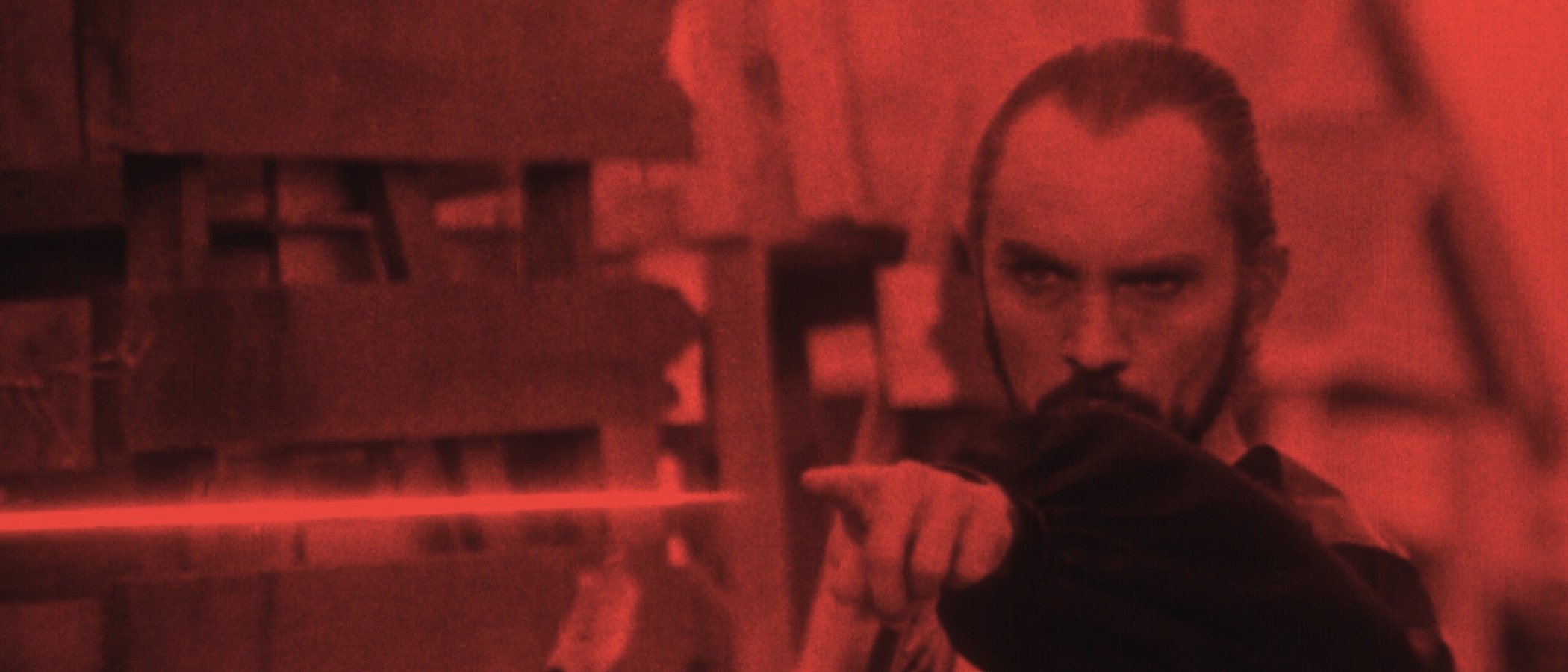
There's a running joke among British actors working in Hollywood: if you've got an RP accent and can arch an eyebrow, you're getting cast as the villain. It's so consistent it's practically a law of physics. Need someone to threaten the hero while sounding effortlessly superior? Get a Brit. Need a villain who makes cruelty sound like poetry? Ring RADA's alumni department.
From Alan Rickman's Hans Gruber to Anthony Hopkins' Hannibal Lecter to Tom Hiddleston's Loki, British actors have cornered the market on cinematic evil. But why? What is it about the British accent - specifically the upper-class British accent - that screams "villain" to American audiences?
The answer is more complicated, and more politically charged, than Hollywood would like to admit.
The Colonial Hangover
Let's start with the elephant in the room: America was literally founded by rebelling against the British. The War of Independence, the Revolutionary War, "no taxation without representation" - the founding myth of the United States is a story about throwing off the yoke of British rule. The Redcoats were the original villains.
That cultural memory runs deep. The British accent - particularly the clipped, received pronunciation accent of the English upper class - carries associations of imperialism, class superiority, and the kind of institutional cruelty that comes from centuries of telling other countries what to do. When an American audience hears a British accent in a film, they unconsciously hear the voice of authority, oppression, and condescension.
It's not rational. It's cultural muscle memory. And Hollywood has exploited it ruthlessly for decades.
The Accent as Shorthand
Film is an efficient medium - you've got limited screen time to establish character, and audiences need to process information quickly. The British villain accent is a spectacular piece of narrative shorthand: the moment a character speaks in clipped, precise English tones, the audience understands three things simultaneously. This person is intelligent. This person is dangerous. This person considers themselves superior to everyone in the room.
That's an extraordinary amount of characterisation delivered by vocal quality alone. Alan Rickman didn't need a backstory to make Hans Gruber terrifying - his voice did the work. "Now I have a machine gun. Ho. Ho. Ho." Every syllable drips with contempt, amusement, and absolute confidence. Try that line in a Brooklyn accent. It doesn't work.
The same principle applies across the genre spectrum. Jeremy Irons in The Lion King made Scar the most compelling character through voice alone. Ian McKellen's Magneto commands attention because he sounds like a Shakespearean actor who's decided to destroy humanity. Which, functionally, he is.
Shakespeare's Long Shadow
British actors are disproportionately trained in classical theatre, which means they can do things with language that many American-trained actors simply can't. The RSC and the National Theatre produce performers who can make a monologue feel like a weapon - who understand rhythm, pause, emphasis, and the precise deployment of verbal menace.
Villains get the best speeches. Always have. From Iago to Richard III, the great dramatic tradition privileges the articulate villain over the heroic mumbler. British training prepares actors for exactly this: the ability to make evil sound not just plausible but appealing. When Anthony Hopkins delivers "I ate his liver with some fava beans and a nice Chianti," it's horrifying precisely because it sounds civilised. The violence is wrapped in eloquence, which is infinitely more disturbing than screaming.
The Hall of Fame
The list is absurd in its depth:
Alan Rickman - Hans Gruber (Die Hard), the Sheriff of Nottingham (Robin Hood: Prince of Thieves), Severus Snape. Rickman's villains were always the most interesting people in their films, because he played them as people who believed entirely in their own righteousness. Gruber isn't evil; he's a highly competent professional doing his job. That makes him terrifying.
Anthony Hopkins - Hannibal Lecter won him an Oscar for roughly 16 minutes of screen time. Sixteen minutes. That's how powerful the British villain performance can be. Hopkins barely moves, barely raises his voice, and absolutely dominates every scene through the sheer force of precise, controlled menace.
Ralph Fiennes - Voldemort and Amon Goeth represent the two poles of British villainy: fantasy evil and historical evil. Goeth in Schindler's List remains one of cinema's most disturbing performances - a man who kills casually, thoughtlessly, as though exterminating people is slightly less interesting than his breakfast.
Ben Kingsley - from Gandhi to the Mandarin to Sexy Beast's Don Logan, one of the most terrifying villains in British cinema. Kingsley proves that the accent doesn't have to be posh to be devastating - Logan's working-class menace is pure, distilled intimidation.
Tom Hiddleston - Loki became the MCU's most beloved villain because Hiddleston plays him as a Shakespearean trickster god, all wounded pride and razor wit. The British theatrical tradition made Loki possible.
Javier Bardem - yes, he's Spanish, but his Silva in Skyfall was written for, and performed with, the cadences of a British villain. The monologue about rats on an island is pure British theatrical menace filtered through a Continental lens.
The Class System as Character Study
Britain's class system - one of the most rigid and enduring in the Western world - provides Hollywood with a ready-made framework for villainy. The upper-class British accent doesn't just sound evil to American ears; it sounds entitled. It carries the weight of inherited privilege, the assumption that certain people are simply born to rule and others are born to serve.
This is why so many British villains are aristocrats, executives, or colonial administrators. They represent a specific kind of evil: the evil of systems, of institutions, of power exercised without accountability. The Star Wars Empire speaks in British accents for a reason - Grand Moff Tarkin (Peter Cushing) is essentially a space-age colonial governor, commanding genocide with the same tone he'd use to order tea.
It's worth noting the uncomfortable flipside: this typecasting means American audiences associate Britishness with villainy, which reinforces the idea that the American accent is the "default" heroic voice. The hero sounds like us; the villain sounds like them. It's cultural tribalism dressed in casting decisions.
When British Actors Play Heroes (And It Feels Weird)
The dominance of British villainy is so complete that when British actors play American heroes, there's often a curious cognitive dissonance. Christian Bale's Batman, Henry Cavill's Superman, Andrew Garfield's Spider-Man - all British actors using American accents because the hero must sound American. Meanwhile, their British contemporaries are voicing every animated villain and playing every Bond antagonist in their natural accents.
The exception proves the rule: when a British actor plays a hero in a British accent - James Bond, obviously, or Patrick Stewart's Captain Picard - the character is typically coded as exceptionally refined, morally complex, or operating in a specifically British context. The British hero is allowed to be British, but they're rarely allowed to be ordinary.
The Future of British Villainy
As Hollywood makes (fitful, inconsistent) progress toward more diverse casting, the British villain trope is evolving. Actors like Daniel Kaluuya, John Boyega, and Letitia Wright are British actors playing heroes with various accents, expanding the range of what "British in Hollywood" means. The posh white male villain isn't going away - it's too useful as shorthand - but it's no longer the only option.
Meanwhile, streaming has given British actors more opportunities to play complex characters that transcend the hero/villain binary. The days of every British actor in Hollywood being either a villain or a butler may finally be ending.
But they'll pry the British villain archetype from Hollywood's cold, dead hands. Because nothing - absolutely nothing - sells menace like received pronunciation, an arched eyebrow, and the quiet confidence of someone who genuinely believes they're the smartest person in the room.
Now if you'll excuse me, I need to go monologue at someone while descending a staircase.
Test Your Film Knowledge
- Movie Quotes - Can you identify the villain from the quote?
- Frame-a-Day - Identify classic films from a single screenshot
- Six Degrees Sprint - Connect British villain actors
Related Articles
- Movie Villains Who Had a Point - When the bad guys weren't entirely wrong
- Actors Who Only Play Themselves - Typecasting cuts both ways
- One-Scene Wonders - British villains are often the best supporting turns
- The Death of the Movie Star - Are character actors replacing icons?
- Method Actors Who Went Too Far - Some Brits prefer the classical approach