Shane Meadows is the most important British director most people can't name. If you stopped someone on the street and asked them to list British filmmakers, they'd say Ridley Scott, Christopher Nolan, Danny Boyle, maybe Guy Ritchie. Meadows would be lucky to get a mention. This is a crime, because nobody has captured working-class Britain with more honesty, empathy, and devastating accuracy.
Born in Uttoxeter, Staffordshire, Meadows makes films about the England that London-centric British cinema pretends doesn't exist. His Midlands - Nottingham, Derby, the towns and estates between them - is a place of fierce loyalty, casual violence, boredom that breeds both creativity and destruction, and a warmth that persists despite everything. He's not interested in glamour. He's interested in truth.
Dead Man's Shoes (2004): Revenge as Horror Film
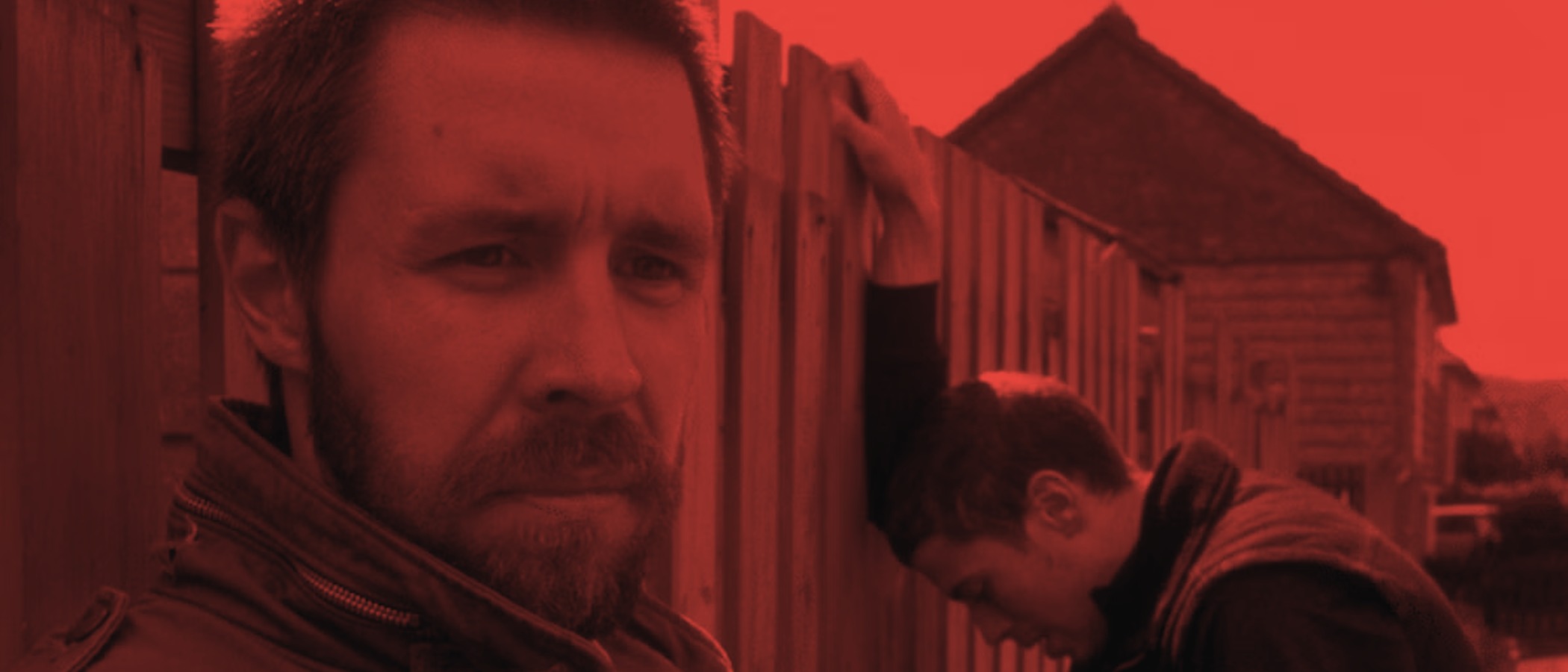
Dead Man's Shoes might be the most frightening British film of the 21st century, and it doesn't contain a single supernatural element. Paddy Considine plays Richard, a soldier who returns to his small Midlands town to destroy the gang of petty criminals who tormented and abused his mentally disabled brother Anthony (Toby Kebbell).
On paper, it sounds like a revenge thriller. In practice, it's a horror film. Considine plays Richard as a force of nature - silent, methodical, and absolutely terrifying. He doesn't fight fair. He doesn't explain himself. He just appears, like a ghost, and systematically dismantles the lives of men who thought they'd gotten away with their cruelty. The scene where he simply stands in a dealer's living room, wearing a gas mask, while the occupants sleep, is more unsettling than anything in the Saw franchise.
But Meadows doesn't let the audience off the hook. The gang members aren't monsters. They're pathetic, small-town losers who did something terrible and have been living with the guilt (or lack of it) ever since. When Richard begins picking them off, you feel their terror because Meadows has taken the time to show them as human beings - stupid, cruel human beings, but human beings nonetheless. The film's moral complexity is what elevates it above standard revenge fare.
Toby Kebbell's performance as Anthony is the film's secret weapon. The flashback scenes showing his abuse are shot with a documentary simplicity that makes them almost unbearable. Meadows based the character on a real friend, and that personal connection gives the whole film an emotional weight that's impossible to fake. When the ending arrives - and it's an ending that recontextualises everything you've just watched - it hits like a train.
Made for virtually nothing, shot in Matlock and the surrounding Derbyshire countryside, Dead Man's Shoes is a masterpiece that proves you don't need money to make something devastating. You just need talent, commitment, and something real to say. It's essential viewing, and we've included it on both our gangster films ranking and our underrated thrillers list.
This Is England (2006): Childhood, Nationalism, and Loss
If Dead Man's Shoes is Meadows' horror film, This Is England is his heartbreak. Set in 1983, it follows Shaun (Thomas Turgoose, in one of the great debut performances in cinema), a 12-year-old boy grieving his father, who died in the Falklands War. Shaun falls in with a group of skinheads - not the racist kind, the original kind, working-class kids who liked ska music and Doc Martens and a sense of belonging.
For its first half, This Is England is almost joyful. The skinhead group is a found family for Shaun - Woody (Joe Gilgun), Lol (Vicky McClure), Milky (Andrew Shim) - and Meadows captures the pleasure of belonging with genuine warmth. The music, the clothes, the banter, the sense of walking through the world with people who've got your back. It's beautiful.
Then Combo comes home.
Stephen Graham's performance as Combo is one of the defining pieces of British screen acting. An older skinhead fresh out of prison, Combo arrives with a charisma that masks his National Front politics. He's funny, he's magnetic, he gives Shaun the father figure he's desperate for. And then, gradually, the racism emerges - not as cartoon villainy, but as the seductive, insidious ideology that it actually is. Meadows shows exactly how a grieving child can be radicalised, and it's terrifyingly plausible.
The film's climax - Combo's assault on Milky - is one of the most difficult scenes in British cinema. Graham plays it with a fury that tips into something pathetic and broken, and the aftermath, with Shaun sitting alone on a beach throwing his St. George's Cross flag into the sea, is an image of such concentrated meaning that it defines an entire era of British identity.
Tracking your film journey? Our 100 Movies Bucket List Poster is the perfect way to scratch off the classics.
What Makes Meadows Different
Meadows' approach is distinct from every other British filmmaker for several reasons. First, his casting. He consistently uses non-professional or first-time actors alongside experienced performers, and the mix creates a texture that purely professional casts can't achieve. Thomas Turgoose had never acted before This Is England. Toby Kebbell's career was launched by Dead Man's Shoes. Meadows finds these people and gives them space to be real rather than performative.
Second, his locations. Meadows shoots in the actual places his stories are set - Nottingham, Derby, Matlock, the East Midlands. He doesn't recreate the Midlands in a London studio. The result is an authenticity of place that you can feel in every frame. The brutalist architecture, the empty high streets, the scrubby green spaces - these aren't set design. They're real.
Third, and most importantly, his empathy. Meadows never looks down on his characters. He doesn't romanticise poverty or violence, but he doesn't condemn his people either. Even Combo - a racist, a bully, a genuinely dangerous man - is shown as a product of his environment, someone whose pain has curdled into hatred. This isn't sympathy. It's understanding. And it's what makes Meadows' films so much more powerful than the typical British social realism that treats working-class characters as specimens to be observed.
The Legacy
The This Is England television series - '86, '88, and '90 - continued the story across three decades and are, collectively, some of the best drama British television has ever produced. Vicky McClure became a star and went on to Line of Duty. Stephen Graham became one of the most in-demand actors in the country. Thomas Turgoose built a career that Meadows' belief made possible.
But it's the films that matter most. Dead Man's Shoes and This Is England are the two best British films of the 2000s, and I'll die on that hill. They're about this country - not the tourist-board version, not the Richard Curtis version, but the real one. The one where people struggle and fight and love each other with a ferocity that comes from having nothing else.
Shane Meadows showed Britain its own face. Not everyone liked what they saw. That's exactly the point.