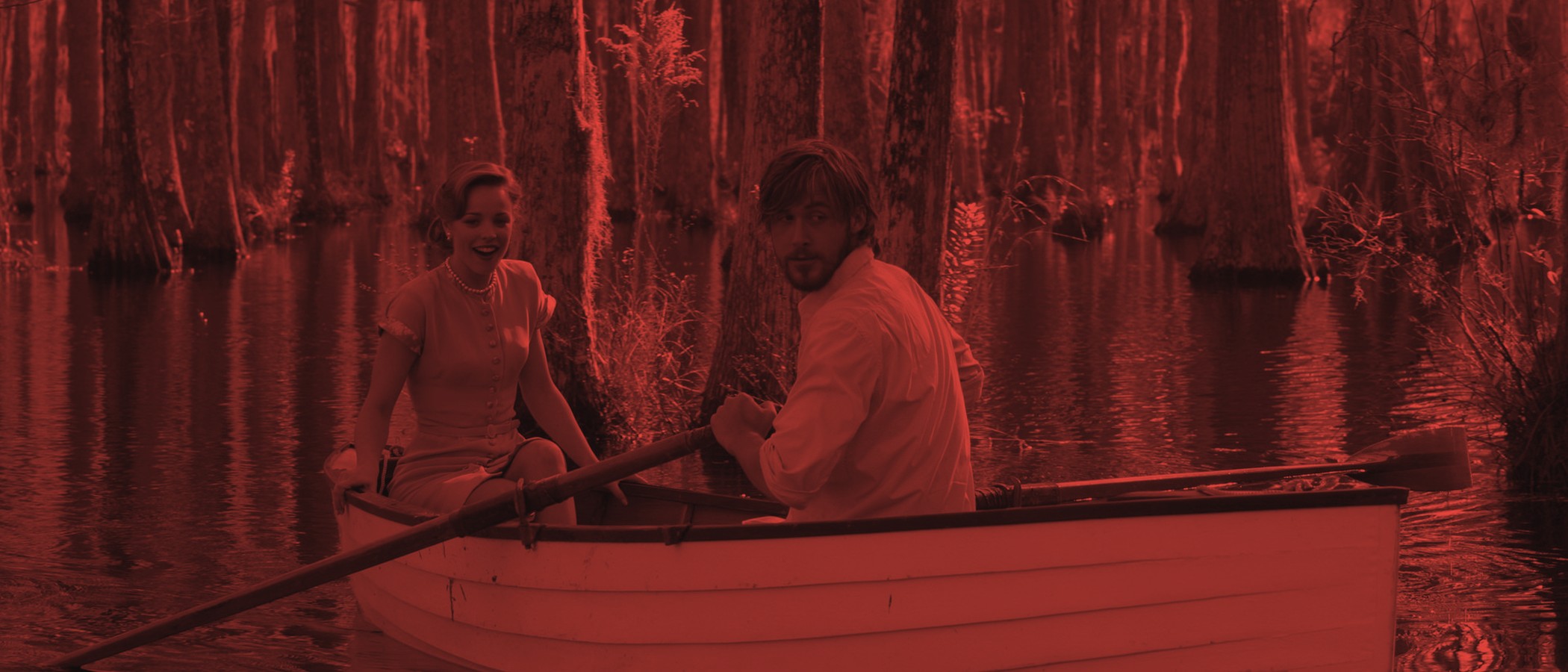
Romantic comedies have done incalculable damage to our understanding of courtship. The behaviors we're taught to find charming would, in reality, result in police involvement.
Let's revisit some "classic" romances through the lens of "would this result in a restraining order?"
The Notebook (2004)
Noah threatens to kill himself unless Allie agrees to a date. He hangs from a Ferris wheel, demanding she say yes while she's clearly terrified. She relents to save his life.
Later, he writes her 365 letters she doesn't respond to. Then he buys the house they once talked about, renovating it to her specifications, and waits for her to return. For years.
In romantic comedy logic: devotion. In reality: coercive behaviour followed by an obsessive fixation that should concern everyone involved. The film treats his refusal to accept rejection as romantic persistence rather than inability to process "no."
Say Anything (1989)
Lloyd Dobler stands outside Diane's window holding a boombox playing "their song" after she's broken up with him. It's iconic. It's also showing up uninvited at someone's home at night to pressure them into reconsidering their clearly stated decision.
The scene works cinematically because of Peter Gabriel and John Cusack's face. Remove the soundtrack and the star, and you have a restraining order application.
Lloyd doesn't accept the breakup. He escalates. The film rewards this with reconciliation. The lesson: if someone rejects you, increase the intensity of your gestures.
Twilight (2008)
Edward watches Bella sleep without her knowledge. He follows her to other cities. He disables her truck to prevent her from seeing friends. He describes wanting to kill her constantly.
She finds this alluring.
The franchise frames Edward's controlling behaviour as protective love. He's not possessive; he's devoted. He's not stalking; he's watching over her. The distinction is meaningful only if you ignore everything he actually does.
Love Actually (2003)
Mark is in love with his best friend's wife. His "romantic gesture" is showing up at her home with cue cards declaring his love while her husband is inside. He explicitly asks her to lie about who's at the door.
She kisses him. The film treats this as bittersweet rather than deeply inappropriate. Mark has spent the entire film being cold to Juliet, filming her obsessively at her wedding, and now asks her to deceive her husband to participate in his fantasy.
This isn't unrequited love handled maturely. It's boundary violation presented as vulnerability.
Passengers (2016)
Jim wakes Aurora from cryosleep, condemning her to die on the spaceship with him rather than reaching her destination. He does this because he's lonely and finds her attractive. He watched her videos. He researched her life. Then he murdered her future.
The film has them fall in love. She forgives him. They live happily ever after.
Strip away the sci-fi setting: a man kidnaps a woman and forces her into a relationship because the alternative is his own loneliness. She eventually develops Stockholm syndrome. The end.
Fifty Shades of Grey (2015)
Christian Grey runs a background check on Ana before their first date. He tracks her phone. He shows up at her workplace unannounced. He dictates what she eats. He isolates her from friends.
The film presents this as BDSM, but the BDSM community has thoroughly rejected the comparison. What's depicted isn't kink with consent - it's abuse with a red room.
Ana signs a contract under pressure she doesn't fully understand, negotiated from a position of massive power imbalance. That's not consent; that's coercion.
The Pattern
These films share a troubling template: the man pursues, the woman resists, the man escalates, the woman capitulates. Persistence overcomes rejection. Grand gestures overwhelm boundaries. The lesson isn't "respect decisions" but "try harder."
Real romance requires mutual interest, respected boundaries, and the ability to accept "no" gracefully. These films teach the opposite: rejection is a challenge, escalation is romantic, and boundaries exist to be overcome.
The next time a film frames stalking as devotion, ask: would this behaviour require a police report if the pursuer were less attractive?
The answer is usually yes.
Test Your Film Knowledge
- Movie Quotes - Romantic lines that hit different now
- Actor Connections - Link stars of problematic romances
- Emoji Plot - Decode love stories from emojis
Related Articles
- Rewatching 90s Movies That Aged Badly - When nostalgia meets reality
- Plot Holes That Ruin Movies - Logical failures in storytelling
- Movies Everyone Quotes Wrong - Lines we've been mangling