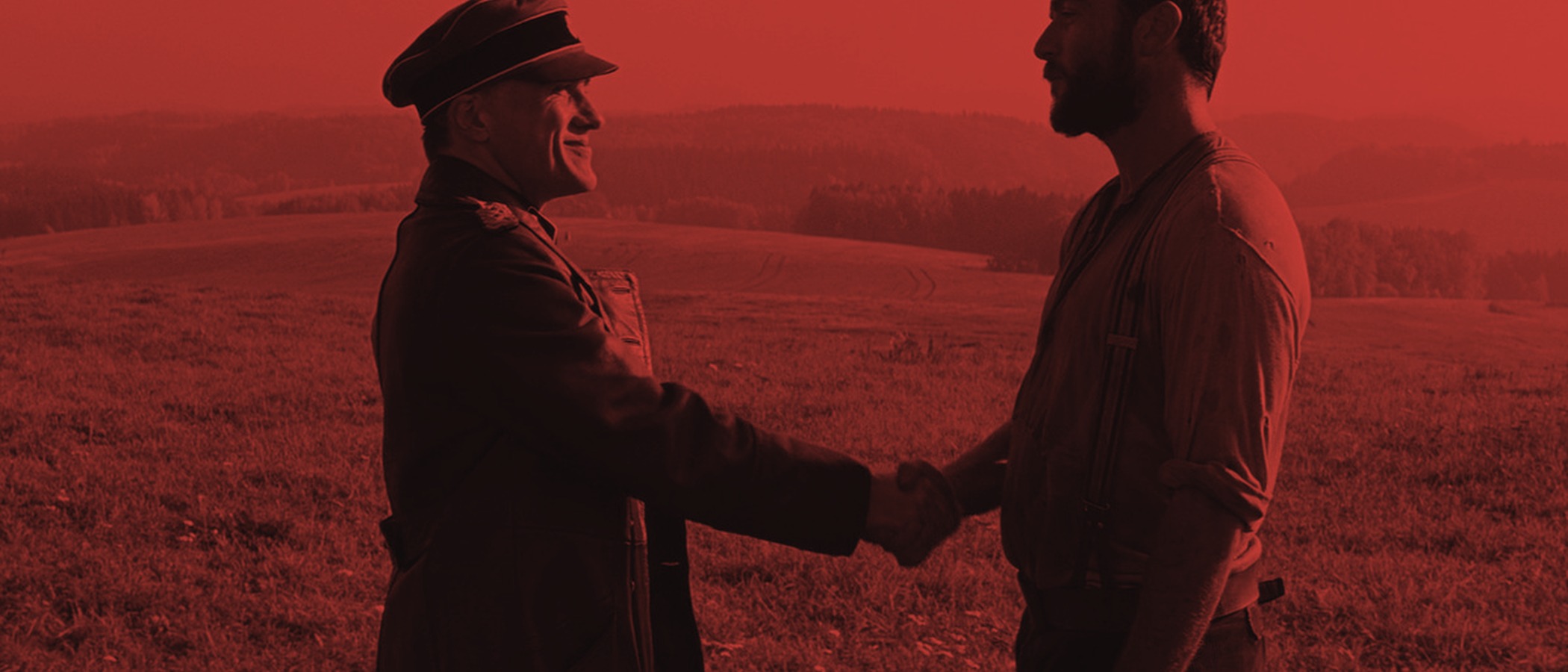
The streaming “skip intro” button has trained audiences to see opening credits as obstacles. Get to the content. Nobody cares about names.
But opening credits were once part of the film. They set tone, established visual language, sometimes told stories of their own. These sequences prove that everything on screen should matter.
Se7en (1995)
Kyle Cooper’s sequence redefined the form. Scratched film, distorted images, handwritten text that looks like a serial killer’s journal. By the time John Doe appears, you already know his aesthetic.
The credits aren’t just showing names; they’re showing a worldview. This is what obsession looks like. This is what meticulous madness produces. The main titles tell you everything about the villain before you meet him.
Nine Inch Nails’ remix of “Closer” creates the sound design. It’s industrial, disturbing, wrong in ways that prepare you for what’s coming. The sequence won every award available.
Catch Me If You Can (2002)
Oliver Kuntzel and Florence Deygas created animated credits that tell the entire plot of the film through stylised chase sequences. Frank Abagnale runs. Tom Hanks pursues. Identities shift.
The design evokes 1960s advertising - clean shapes, limited colours, a sophistication that matches the era. It’s fun where Se7en was terrifying, proving that opening credits can set wildly different tones.
You could watch these credits knowing nothing and understand what the film will be about.
Enter the Void (2009)
Gaspar Noé flashes title cards at seizure-inducing speed, cycling through every font imaginable. It’s aggressive, overwhelming, deliberately uncomfortable. This is not a film that will treat you gently.
The sequence lasts over two minutes of pure visual assault. Names become abstraction. Text becomes texture. By the time it ends, your brain is already softened for the hallucinogenic journey ahead.
Dr. No (1962)
Maurice Binder created the James Bond visual language. The gun barrel sequence. The silhouetted figures. The dots that become casino chips. All of it started here.
Every Bond film since has riffed on Binder’s templates. The opening credits became brand identity - you know what kind of film you’re watching before Bond appears.
The formula: danger, sophistication, sexuality, movement. Credits as promise of exactly what the next two hours will deliver.
Vertigo (1958)
Saul Bass plus Bernard Herrmann equals perfect collaboration. Spirals within spirals, emerging from an eye, suggesting psychological collapse before the story begins.
Bass understood that title sequences could be thematically loaded. The spirals aren’t decoration; they’re Vertigo’s central visual motif. Obsession circles back on itself. Identity spins into confusion. The credits aren’t separate from the film; they’re the thesis statement.
Spider-Man 2 (2004)
Alex Ross paintings summarising the first film while credits play. Each frame could hang in a gallery. The sequence is simultaneously recap, celebration of comic art, and emotional preparation for the sequel’s themes.
The paintings feel more real than live action somehow. Ross’s hyperrealistic style bridges comic mythology and cinema, arguing that these stories deserve fine art treatment.
Watchmen (2009)
Bob Dylan’s “The Times They Are a-Changin’” plays over alternate history vignettes. Superheroes in Vietnam. The Kennedy assassination. Studio 54. Each shot is a photograph that didn’t exist, a history we didn’t live.
Zack Snyder’s best filmmaking might be this sequence. It does worldbuilding that would take an hour of exposition in five minutes of imagery. You understand the Watchmen universe through implication and icon.
Napoleon Dynamite (2004)
Food arranged on plates to spell credits. Hands entering frame to shift items. Chapstick, tots, action figures - the detritus of awkward teenage life becoming title design.
The sequence is handmade where everything else on this list is slick. That’s the point. Napoleon Dynamite exists outside Hollywood’s production values, and its credits announce that immediately.
Panic Room (2002)
David Fincher made credits that exist within the physical space of New York City. The text floats between buildings, enormous and solid, as though the titles occupy real architecture.
It’s a digital effect that feels analog - letters as objects in space. The sequence establishes Fincher’s precise geometry before a frame of story appears.
Why Credits Matter
Opening credits are a contract. They tell you what kind of film you’re about to watch, what aesthetic rules apply, what emotional register to expect. Skip them and you enter disoriented.
The best sequences understand this. They’re not obligations; they’re opportunities. Names must appear - might as well make those names matter.
The streaming era treats credits as friction. Friction can be art. These sequences prove it.
Test Your Film Knowledge
- Frame-a-Day - Identify title sequences
- Director Spotlight - Match directors to their signature openings
- Name That Score - Music that defined credit sequences
Related Articles
- The Art of the Cold Open - What happens after credits
- The Golden Age of Movie Posters - Visual design that sells films
- Movie Scores That Outgrew Their Films - Music that became bigger than the movie